
Becoming a PAT Tester can provide an accessible route into electrical-safety, facilities and compliance work in the UK. You do not necessarily need to become a qualified electrician first, but you do need sufficient knowledge, training and practical ability to inspect electrical equipment safely and interpret the results of any tests you perform.
Quick OverviewBecoming a PAT Tester in the UK can be a practical entry into electrical-safety and compliance work. You don’t generally need to be a qualified electrician or hold a specific licence, but you do need suitable training, electrical-safety knowledge and practical testing skills.This guide covers:✅ Steps to starting a career as a PAT Tester✅ PAT testing courses and recognised qualifications✅ Practical skills, equipment and experience needed✅ UK PAT testing laws and risk-based inspection✅ PAT Tester salaries, jobs and self-employment✅ Online training and the importance of hands-on practice✅ Choosing suitable training and maintaining professional competence
If you are researching how to become a pat tester UK, the typical pathway is to learn basic electrical safety, complete suitable pat testing training, develop hands-on inspection and testing skills, gain experience and then decide whether you want employed work or self-employment.
What Is PAT Testing?
PAT stands for portable appliance testing. A pat test is an examination of electrical equipment intended to help establish whether it remains safe to use.
Despite the name, PAT is not simply a process of connecting every appliance to an electronic tester. Depending on the equipment and risk, an effective maintenance system can include user checks, formal visual inspection and combined inspection and electrical testing.
Visual inspection is particularly important. HSE points out that some electrical defects can be discovered by looking at the equipment but cannot necessarily be detected by a test instrument alone.
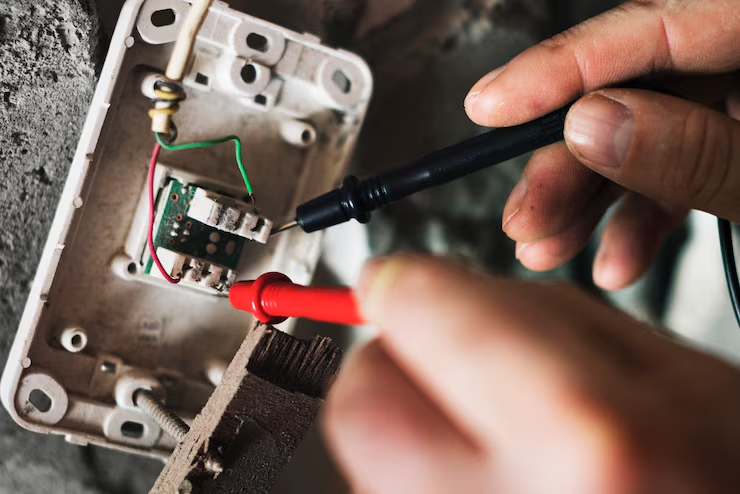
Examples of equipment that may fall within workplace electrical-maintenance arrangements include computers, kettles, extension leads, printers, vacuum cleaners, portable tools and other plug-in appliances.
What Does a PAT Tester Do?
A PAT Tester inspects electrical equipment, identifies visible safety problems and carries out appropriate electrical tests where necessary.
Typical work may include examining plugs, flexible cables, casings and accessible connections; checking for overheating or poor repairs; determining equipment class; using PAT testing instruments; recording results; and identifying equipment that needs to be removed from use or referred for further investigation.
The role requires more judgement than simply putting a sticker on an appliance.
A tester needs to understand what they are inspecting, why a particular test is appropriate and whether the result indicates a problem. They should also recognise when an appliance or fault requires someone with greater electrical expertise.
How to Become a PAT Tester in the UK
People asking “how do i become a pat tester” can usually think of the career pathway in five stages.
1. Learn Electrical-Safety Fundamentals
Start with basic electrical knowledge.
You should understand common electrical hazards, plugs, cables, fuses, insulation, protective earthing and equipment classifications. You should also understand how appliances can deteriorate through movement, repeated handling, impact, heat, moisture or inappropriate use.
This foundation is important because inspection frequency depends partly on risk.
A desktop computer that remains in one position in a dry office is generally exposed to less damage than a power tool used repeatedly on a construction site.
2. Complete Suitable PAT Testing Training
The next stage is usually a pat testing course.
Good pat testing training should help you understand subjects such as:
- electrical hazards and safe working;
- relevant legislation;
- appliance construction and classes;
- visual inspection;
- PAT instruments and test methods;
- interpreting results;
- risk-based maintenance; and
- reporting and record keeping.
If you are researching how to train to be a pat tester, compare the actual learning outcomes rather than choosing a course purely because it is short or uses words such as “certified”.
Different programmes can have very different levels of assessment and recognition.
3. Develop Practical Testing Skills
PAT testing includes practical, hands-on skills. You may need to inspect real appliances, identify their construction, connect testing equipment correctly and choose a suitable testing procedure.
This is particularly important for learners searching how to become a pat tester online. Online courses can help you learn theory, electrical safety, legislation and testing principles. However, watching a practical demonstration is not the same as proving that you can safely carry out the inspection yourself.
If you plan to work independently, gain suitable practical experience alongside your online training.
4. Build Experience
Practical experience helps you develop better judgement and testing confidence.
Real workplaces can contain damaged cables, poorly repaired plugs, unsuitable extension leads, sensitive electronic devices or unusual appliances that may not match training examples.
A competent PAT tester should also recognise their limits. If a situation requires specialist fault diagnosis, electrical repair or testing beyond your ability, it should be referred to a suitably competent person.
5. Keep Learning
PAT testing competence should be maintained over time.
Testing instruments can change, electrical products continue to develop and safety guidance may be updated. Testers should regularly review authoritative HSE information, manufacturer instructions and relevant industry guidance, including the current IET Code of Practice for In-Service Inspection and Testing of Electrical Equipment.
Do You Need to Be Qualified to PAT Test?
The question do you need to be qualified to pat test is often misunderstood.
There is no single statutory pat testing qualification that everyone must hold before carrying out portable appliance inspection and testing. The key requirement is competence.
HSE explains that simple visual inspections in low-risk environments may require relatively limited training. Combined inspection and electrical testing requires greater knowledge and experience because the tester must use suitable equipment correctly and understand the results.
Therefore, someone does not automatically need to be a fully qualified electrician to perform routine PAT work. However, employers and clients may require specific training or qualifications, while more complex electrical tasks require a higher level of competence.
How to Become a Qualified PAT Tester
For those researching how to become a qualified pat tester, formal training and qualifications are available.
One current route is the City & Guilds Level 3 Award in the In-Service Inspection and Testing of Electrical Equipment (2377-77). City & Guilds updated its qualification information in February 2026 and confirmed that the older 2377-22 and 2377-32 awards have been replaced by 2377-77.
The qualification develops knowledge and practical skills for inspecting and testing electrical equipment and includes practical assessment. However, City & Guilds mainly describes it for practising electricians and people responsible for equipment inspection and testing. Beginners should therefore check entry requirements and training-provider guidance before enrolling.
How to Become a Certified PAT Tester
The phrase how to become a certified pat tester also needs some clarification.
Training providers may use “certificate” to describe different forms of achievement. A pat testing certificate could provide:
- proof of training attendance;
- evidence of completing an online PAT course;
- proof of passing a provider assessment; or
- evidence of completing a formal externally awarded qualification.
These certificates do not necessarily have the same recognition.
A private pat tester certificate should not automatically be presented as a statutory licence, government approval or regulated qualification. Before enrolling, check exactly what the certificate represents and what accreditation, if any, applies to the course.
Is Annual PAT Testing a Legal Requirement?
No. There is no general legal requirement for every workplace appliance to receive PAT testing every 12 months.
In England, Scotland and Wales, the Electricity at Work Regulations 1989 require electrical equipment that could cause injury to be maintained safely. They do not set one compulsory testing method or fixed annual interval for every appliance.
Northern Ireland has corresponding Electricity at Work Regulations (Northern Ireland) 1991.
Testing frequency should instead be based on risk and circumstances.
| Factor | Why it matters |
| Frequency of movement | Frequently moved equipment may suffer more damage |
| Working environment | Wet, dusty or harsh conditions can increase risk |
| Equipment type | Hand-held tools may need closer attention than static IT equipment |
| Previous failures | Repeated faults may justify more frequent checks |
| User behaviour | Rough handling can accelerate wear and deterioration |
A responsible PAT tester should therefore avoid telling every customer that annual testing is legally compulsory.
Do New Electrical Appliances Need a PAT Test?
New electrical equipment should normally be supplied in a safe condition and does not automatically require a formal portable appliance test before use.
HSE recommends carrying out a simple visual inspection to check that the appliance has not been damaged.
This reflects the wider purpose of PAT testing: inspections and tests should be based on genuine electrical safety needs, equipment condition and risk rather than being carried out automatically on every appliance.
What Skills Do PAT Testers Need?
If you are researching how to train to be a PAT tester, look for a course that provides relevant theoretical knowledge as well as practical understanding.
Visual Inspection Skills
Many faults can be identified before electronic testing begins.
A tester should recognise damaged cables, cracked plugs, exposed parts, unsuitable repairs, signs of overheating and equipment that has been used incorrectly.
Knowledge of Electrical Equipment
Understanding Class I and Class II construction is particularly important because different protective arrangements can require different testing approaches.
Class I equipment relies on protective earthing as part of its safety system, while Class II equipment generally relies on double or reinforced insulation.
Ability to Use Test Equipment
Depending on the work, you may use anything from a relatively simple pass/fail tester to an instrument displaying individual measurements.
More detailed readings require greater ability to interpret results.
Risk Assessment
The condition of an appliance cannot always be assessed in isolation.
Consider where it is used, how often it moves, who uses it and whether previous inspections have revealed recurring problems.
Reporting and Record Keeping
HSE does not impose a universal requirement to label every tested appliance or maintain PAT records.
However, both can be useful for managing a maintenance programme.
Professional clients may expect clear records identifying what was inspected, the result and any action required.
What Equipment Does a PAT Tester Need?
The main technical purchase is usually a suitable PAT testing instrument.
Simple testers may provide straightforward pass/fail results, while more advanced machines display detailed measurements and can store records electronically.
Commercial testers handling large numbers of appliances may benefit from downloadable testers, barcode systems or software that helps manage equipment records.
Other items may include test leads, adaptors and identification labels.
Equipment choice should reflect your competence and the type of work you intend to perform. Buying an advanced tester does not make somebody competent to use all of its functions.
The test instrument itself should also be maintained in accordance with manufacturer requirements.
How Much Can a PAT Tester Earn?
PAT Tester earnings vary considerably.
Indeed reported an average UK base salary of approximately £28,464 per year as of 14 August 2026.
This should be treated as an indicative market figure rather than a promised salary. Earnings can depend on region, employer, experience, travel requirements, productivity expectations and whether the role includes additional electrical or facilities duties.
Some PAT testers work almost entirely on high-volume appliance inspection. Others combine PAT responsibilities with facilities management, maintenance or broader compliance work.
Developing suitable additional skills can therefore improve the range of roles available.
How to Become a Self-Employed PAT Tester
Once you have sufficient competence and practical experience, you may decide to work independently.
If you are researching how to become a self employed pat tester, technical ability is only part of the preparation.
You may need to arrange appropriate insurance, business registration, tax records, testing equipment, equipment-maintenance arrangements, transport, client records, quotations, terms of business and invoicing.
You should also calculate your actual operating costs before setting prices.
A commercial job involves more than the time spent testing appliances. Travel, finding equipment on site, creating reports, answering client questions, maintaining instruments and administration all consume working time.
Finding PAT Testing Clients
Potential customers can include offices, schools, shops, hospitality businesses, landlords, charities and other organisations using significant quantities of electrical equipment.
Reliability and clear reporting can be more useful long-term differentiators than simply advertising the lowest price per appliance.
Avoid telling customers that receiving a PAT report automatically makes their organisation legally compliant. PAT testing is only one possible element of a broader electrical-safety management system.
Choosing PAT Testing Training Through Upskilling Academy
Upskilling Academy currently operates as an online learning provider and advertises a large catalogue of courses intended for flexible study.
Its website states that learners completing courses may be eligible for PDF certificates and also refers generally to accredited certification.
However, those provider-wide claims should not automatically be applied to a particular PAT testing course.
At the time this guide was researched, a current publicly indexed Upskilling Academy PAT course could not be independently verified. If you are considering PAT training through Skills Pack, check the live listing and confirm:
- what PAT subjects are covered;
- total learning time;
- assessment format;
- whether any practical testing is included;
- what certificate is issued;
- who provides any claimed accreditation;
- whether additional certificate fees apply; and
- whether the course leads to a regulated qualification.
This matters because private CPD or course accreditation is different from a regulated electrical qualification.
An online Upskilling Academy course may still be useful for building theoretical knowledge, particularly where flexible study is important. However, professional PAT testing also requires practical competence appropriate to the work being undertaken.
Frequently Asked Questions About Becoming a PAT Tester

Can Anyone Become a PAT Tester?
Potentially, yes. You do not have to be a qualified electrician for every form of portable appliance inspection. However, you must have sufficient knowledge, training and experience for the particular tests you undertake and should not accept work outside your competence.
Do You Need to Be an Electrician to PAT Test?
No. HSE does not require every PAT Tester to be an electrician. Appropriate training may be enough for simpler work, while combined testing and technically complicated situations require greater knowledge and experience.
Do I Need a PAT Testing Qualification?
There is no single compulsory qualification for every PAT-testing activity. Competence is the central requirement. Formal qualifications such as the current City & Guilds 2377-77 Level 3 Award are available, while private training courses and certificates may have different purposes and status.
Can I Become a PAT Tester Online?
You can learn much of the theory online, including electrical-safety concepts, legal duties and testing principles. However, how to become a pat tester online should also consider practical development. Online completion alone does not necessarily demonstrate your ability to perform physical inspection and testing competently.
How Long Does PAT Test Training Take?
There is no statutory training duration. Introductory theory can sometimes be covered relatively quickly, but practical competence may take longer. Your previous electrical knowledge, training quality, assessment and access to hands-on experience all affect how soon you can work independently.
Is a PAT Testing Certificate a Licence?
No. A course certificate is not automatically a government licence or regulated electrical qualification. Always establish what assessment you completed and who issued the certificate before describing its professional status.
Does Everything Have to Be PAT Tested Every Year?
No. Annual testing of every appliance is not a general legal requirement. Frequency should normally be based on factors such as equipment type, working environment, movement, previous failures and risk.
Can PAT Testing Be a Full-Time Career?
Yes. PAT testing roles exist with specialist inspection businesses, electrical contractors and facilities-management providers. Some professionals combine PAT testing with other appropriate electrical, maintenance or compliance skills to create broader career opportunities.
Can I Start My Own PAT Testing Business?
Yes, provided you are competent to offer the services you advertise. You should also arrange the necessary equipment, insurance, tax and business administration, client records and pricing before beginning commercial work.
Conclusion
The pathway for how to become a pat tester UK is relatively straightforward, but becoming competent involves more than completing a short course.
Start with electrical-safety fundamentals, undertake suitable pat testing training, gain practical inspection and testing experience and continue developing your knowledge. If you want to become a pat tester professionally, understand both how to perform appropriate tests and when a task requires greater expertise.
There is no universal statutory PAT licence, and asking do you need to be qualified to pat test is better answered in terms of competence. Formal options such as the City & Guilds Level 3 Award exist, while private courses and certificates have different purposes.
Whether you eventually become an employed PAT Tester or pursue self-employment, safe judgement, practical ability, accurate reporting and continued professional development are the foundations of a responsible career.

About the Author
7v4AOMpuc1AYEkY
Professional educator and content writer at StudyMate Central, helping UK professionals advance their careers.