
Christine Ferguson
My experience with you was fantastic and easy to navigate. I'm looking forward to taking the course.
 Lifetime Access
Safeguarding Vulnerable Adults Overview The well-being and security of vulnerable adults are paramount in today’s society, especially as…
Access to 1500+ Courses with free CPD Certificates for Only £99 Get Now
The well-being and security of vulnerable adults are paramount in today’s society, especially as populations age and the need for specialised care increases. The Safeguarding Vulnerable Adults course is meticulously designed to equip participants with the knowledge, skills, and confidence to identify, prevent, and respond to abuse, neglect, and exploitation of adults at risk. Whether you are new to the health and social care sector or seeking to deepen your existing expertise, this course delivers comprehensive training based on current best practices and legislative frameworks. Through engaging content and practical scenarios, you will learn how to uphold human rights, promote dignity, and contribute to a culture of safety and respect.
This course provides a deep dive into the critical area of safeguarding vulnerable adults, addressing the numerous challenges they face and the responsibilities of professionals in various sectors, including health and social care, support services, and voluntary organisations. The curriculum combines theoretical foundations with real-world applications, creating a dynamic and interactive learning environment.
The course begins by defining who is considered a vulnerable adult, exploring the legal definitions across different jurisdictions, and identifying the factors that increase vulnerability. It delves into the different types of abuse—physical, emotional, sexual, financial, neglect, institutional, and discriminatory—and illustrates, through case studies, how each might manifest in practice.
Participants will gain knowledge of the signs and indicators of potential abuse and neglect, learning how to recognise when an adult may be at risk. Detailed modules cover risk assessment, reporting procedures, and the importance of record-keeping, ensuring compliance with both organisational and legal requirements. Key legislation and policy frameworks, such as the Care Act, Mental Capacity Act, and local safeguarding procedures, are explored so that learners are aware of their legal obligations and the protection mechanisms available.
A significant emphasis is placed on person-centred care and supporting the autonomy, choice, and dignity of adults at risk. The course also explores multi-agency working, partnership approaches to safeguarding, and how to collaborate effectively with local authorities, police, and other stakeholders. Participants engage with reflective exercises designed to challenge assumptions and biases, fostering an empathetic and effective approach to safeguarding.
Interactive assessments—including scenario-based quizzes, simulated reporting exercises, and guided reflections—ensure that learning is both comprehensive and practical. By the end of the course, you will be equipped to act confidently and responsibly, making a positive difference in the lives of vulnerable adults.
Successfully completing this course enhances your professional credibility and opens doors to a variety of rewarding roles in the public, private, and voluntary sectors. It is particularly valuable for:
Completion of this course can also serve as a stepping stone towards advanced qualifications or roles in safeguarding, adult protection, or management within social care settings.
This course is designed for anyone responsible for, or coming into regular contact with, vulnerable adults. It welcomes professionals and volunteers across a spectrum of sectors, including:
Whether you already work in a relevant field or are seeking entry, the course offers foundational and practical knowledge to improve your safeguarding practice.
To enrol and thrive in the Safeguarding Vulnerable Adults course, the following requirements are recommended:
No formal qualifications are necessary, making this course accessible to a broad audience eager to improve safeguarding standards for vulnerable adults across society.
My experience with you was fantastic and easy to navigate. I'm looking forward to taking the course.
Provided highly informative and helpful responses, with quick and efficient replies.
The course selection is broad, engaging, easy to follow, and offers a good challenge.
Excellent course with user-friendly website navigation, making it easy to follow. I'm really enjoying the experience.
Great course with valuable information. Easy to follow, and I appreciated the flexibility to work at my own pace.



Once you complete your purchase, you’ll receive access to your course through your Upskilling Academy account. You can log in and access your learning materials online at any time.
Your access period depends on the course and the package you purchase. Please check the course details or your order information for the applicable access period.
Yes. Upskilling Academy courses are designed to provide flexible online learning, allowing you to study at a pace that suits your schedule.
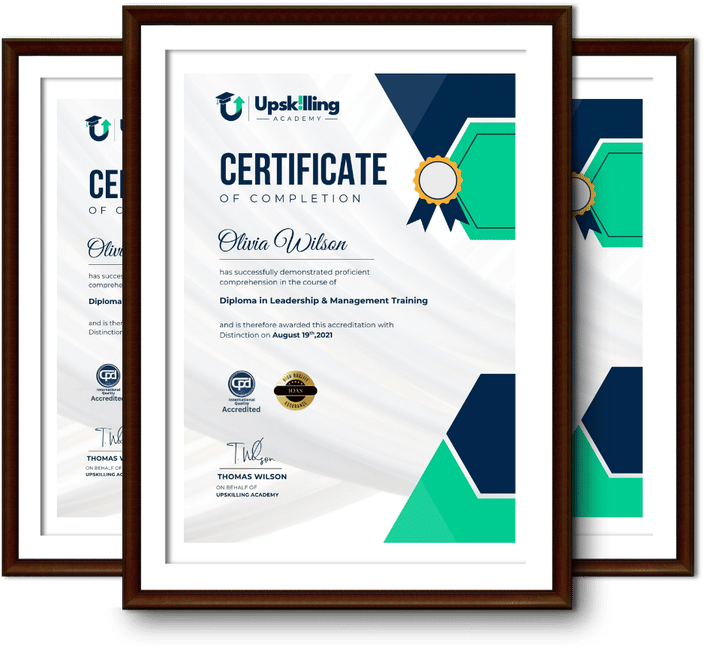
Certificate availability varies by course. Where a certificate is included, you’ll receive information about the requirements and how to obtain it within the course or upon completion.
Many courses are suitable for beginners, while others may assume some previous knowledge. Please review the individual course description for information about the recommended level and prerequisites.