
Christine Ferguson
My experience with you was fantastic and easy to navigate. I'm looking forward to taking the course.
 Lifetime Access
Respiratory Protection Overview Respiratory protection is an essential aspect of occupational health and safety across various industries, including…
Access to 1500+ Courses with free CPD Certificates for Only £59 Get Now
Respiratory protection is an essential aspect of occupational health and safety across various industries, including manufacturing, healthcare, construction, and laboratory work. This comprehensive course is designed to provide participants with the knowledge, skills, and practical understanding required to identify respiratory hazards, select appropriate protective equipment, and implement effective respiratory protection programs in the workplace. Through a rigorous curriculum that covers laws and regulations, risk assessment, respirator selection and maintenance, and program management, this course empowers learners to minimize exposure to airborne hazards and secure a safer work environment.
The Respiratory Protection course delves deeply into both the theoretical and practical aspects of respiratory safety. The curriculum is structured to progressively build expertise, starting with foundational concepts and expanding into more advanced topics.
Participants will begin by exploring the anatomy and physiology of the respiratory system, gaining foundational knowledge about how hazardous gases, vapors, particulates, and biological agents impact health. This is followed by an examination of workplace respiratory hazards in different environments, and the controlling laws and standards, such as OSHA’s Respiratory Protection Standard (29 CFR 1910.134), NIOSH certifications, and relevant international guidelines.
A central focus of the course is learning to conduct workplace hazard assessments to determine the necessity and type of respiratory protection. Learners will investigate the principles of risk assessment, air monitoring, and exposure evaluation. Through practical case studies and real-world scenarios, students will discover how to evaluate potential hazards and make informed decisions regarding control measures.
One of the key aspects covered is the comprehensive selection and use of respirators. Students will explore the different types of respiratory protective equipment, including air-purifying respirators (APRs), powered air-purifying respirators (PAPRs), supplied-air respirators (SARs), and self-contained breathing apparatuses (SCBA). Criteria for selection—based on contaminants, concentration, duration of use, and worker health—will be discussed in detail.
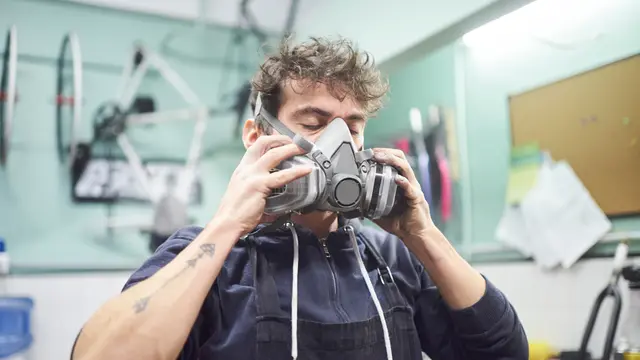
The course also provides hands-on guidance on the proper fit, use, care, and maintenance of respiratory protective equipment. Learners will experience qualitative and quantitative fit testing methods, receive instruction on donning and doffing procedures, and understand limitations and storage requirements for respirators. Emphasis is placed on user seal checks, identification of defects, routine inspections, cleaning protocols, and the implications of improper use.
Instruction extends to the development, implementation, and management of effective respiratory protection programs—essential for organizations to fulfill regulatory compliance. Learners will gain expertise in program components, written policies, medical evaluations, recordkeeping, training requirements, and periodic program review.
By the end of this course, participants will be able to:
The learning experience is enhanced with case studies, interactive discussions, self-assessment quizzes, group activities, and simulation-based exercises to reinforce critical concepts and foster practical skills.
Competence in respiratory protection is vital for a wide range of professions and industries. By successfully completing this course, participants will open up the following career possibilities:
Additionally, the foundational and advanced knowledge gained in this course positions students for further study in occupational safety, industrial hygiene, or environmental health, as well as for specialized certification exams and continuing education opportunities.
This course is designed to meet the needs of a broad audience, including:
No prior experience with respiratory protection is necessary, although familiarity with basic occupational health principles is helpful. The course is accessible to beginners and valuable to seasoned professionals seeking a comprehensive or updated understanding of respiratory protection.
To enroll in the Respiratory Protection course, participants should meet the following requirements:
Upon completion of this course, a certificate will be awarded, certifying the participant’s proficiency in respiratory protection and their readiness to implement best practices in a variety of professional contexts.

My experience with you was fantastic and easy to navigate. I'm looking forward to taking the course.
Provided highly informative and helpful responses, with quick and efficient replies.
The course selection is broad, engaging, easy to follow, and offers a good challenge.
Excellent course with user-friendly website navigation, making it easy to follow. I'm really enjoying the experience.
Great course with valuable information. Easy to follow, and I appreciated the flexibility to work at my own pace.



Once you complete your purchase, you’ll receive access to your course through your Upskilling Academy account. You can log in and access your learning materials online at any time.
Your access period depends on the course and the package you purchase. Please check the course details or your order information for the applicable access period.
Yes. Upskilling Academy courses are designed to provide flexible online learning, allowing you to study at a pace that suits your schedule.
Certificate availability varies by course. Where a certificate is included, you’ll receive information about the requirements and how to obtain it within the course or upon completion.
Many courses are suitable for beginners, while others may assume some previous knowledge. Please review the individual course description for information about the recommended level and prerequisites.