Upskilling Academy
Trusted by 3 million learners 24/7 online training Money back guarantee Fully accredited courses
Quality Assurance Level 3 Course Thumbnail Lifetime Access
Sale

Quality Assurance Level 3 Course

Quality Assurance Overview Quality Assurance (QA) is a vital discipline in the modern world, ensuring products and services…

Best Seller Limited Time Offer
Last Updated 16 Oct 2026 352 Enrolled English Flexible Schedule

Access to 1500+ Courses with free CPD Certificates for Only £99 Get Now

What you will learn

  • - Gain a thorough understanding of quality assurance principles and best practices
  • - Learn to identify, prevent, and resolve defects in products or services
  • - Improve your problem-solving and critical thinking skills
  • - Boost your employability and career prospects in various industries
  • - Become familiar with key quality standards such as ISO and Six Sigma
  • - Enhance your ability to work effectively in team-based, quality-focused environments
  • - Learn practical tools and techniques to ensure consistent product or service excellence

Description

Quality Assurance

Overview

Quality Assurance (QA) is a vital discipline in the modern world, ensuring products and services meet the highest standards of excellence. This course offers a comprehensive exploration into the principles, methodologies, tools, and best practices required to plan, implement, monitor, and continuously improve quality in various sectors, including software development, manufacturing, healthcare, and service industries.

Throughout this course, students will gain both theoretical knowledge and practical skills through real-world examples, case studies, and hands-on exercises. Whether you aspire to work in quality control, testing, or process improvement, this course lays the foundation for a rewarding career in QA.

Description

The Quality Assurance course is meticulously designed to introduce learners to the full spectrum of QA activities, from understanding customer expectations to continuous process enhancements. The curriculum delves into topics such as quality management systems (QMS), the differences between QA and Quality Control (QC), the role of standards (e.g., ISO 9001), auditing processes, root cause analysis, defect prevention, and the latest trends in automation and Agile QA practices.

  • Foundations of QA: Explore the history, evolution, and importance of quality assurance in a global market. Learn about total quality management (TQM), Six Sigma, Lean, and other quality philosophies.
  • Quality Planning and Management: Discover techniques for planning quality into every phase of the project lifecycle. Understand how to establish metrics, set objectives, and create QA plans and documentation.
  • Tools and Techniques: Develop proficiency in using key QA tools such as checklists, flowcharts, Pareto charts, and fishbone diagrams. Practice both manual and automated testing techniques for identifying and mitigating risks.
  • Process Improvement: Learn continuous improvement frameworks and how to foster a culture of quality within organizations. Examine methods for corrective and preventive actions (CAPA), and perform audits to ensure compliance with standards.
  • Emerging Trends: Stay updated with the latest advancements in QA, including DevOps, Agile QA, shift-left/shift-right testing, and the application of artificial intelligence in test automation.

This course offers interactive lectures, collaborative projects, lab assignments, and exposure to industry-standard QA tools. Students will complete a capstone project simulating a full QA lifecycle for a product or process, consolidating their learning and preparing them for real-world applications.

Career Path

Quality Assurance skills are in high demand across diverse industries, ensuring graduates can pursue fulfilling careers in multiple domains. Upon completing this course, you will be equipped to pursue roles such as:

  • Quality Assurance Analyst: Plan and execute testing strategies to validate the quality of products and services.
  • QA/QC Engineer: Oversee the development and implementation of quality standards within engineering, manufacturing, or IT projects.
  • Test Automation Engineer: Design and maintain automated test frameworks to optimize software testing processes.
  • Quality Manager: Direct and manage organization-wide quality initiatives and foster process improvements.
  • Compliance Auditor: Conduct audits and ensure adherence to standards such as ISO, CMMI, or regulatory frameworks.
  • Process Improvement Specialist: Drive continuous improvement projects using Lean, Six Sigma, or other methodologies.
  • Consultant: Advise organizations on quality strategies, process improvements, and industry best practices.

Industries actively seeking skilled QA professionals include software and IT, manufacturing, healthcare, pharmaceutical, finance, automotive, telecommunications, and more. The skills developed in this course also provide a strong foundation for management roles, further certifications, or advanced study in quality and project management.

Who Is This Course For?

The Quality Assurance course is tailored for a wide audience, including:

  • Students and Graduates seeking a foundational entry into quality-oriented roles in various industries.
  • Working Professionals in fields such as IT, engineering, production, or healthcare who wish to enhance their QA expertise or transition into quality-centric positions.
  • Team Leaders and Managers responsible for overseeing projects, products, or operational processes seeking to implement robust quality frameworks.
  • Entrepreneurs and Business Owners wishing to improve product or service quality, strengthen customer satisfaction, and gain competitive advantage.
  • Aspiring Quality Consultants or Auditors looking to master essential practices and standards for effective quality evaluation and improvement.
  • Anyone interested in learning structured methodologies for problem-solving, process optimization, and risk mitigation.

No prior experience in QA is necessary—just a commitment to learning, an eye for detail, and a passion for continuous improvement.

Requirements

  • Academic Background: High school diploma or equivalent. While a background in STEM (Science, Technology, Engineering, Math) is helpful, it is not mandatory.
  • Technical Skills: Basic computer literacy is required. Familiarity with office productivity tools (e.g., spreadsheets, word processors) will be beneficial. For software-specific modules, foundational programming knowledge is helpful but not compulsory.
  • Internet Access: Reliable access to the internet and a computer/laptop capable of running QA tools and online platforms is needed for participation in online sessions and assignments.
  • Time Commitment: Willingness to dedicate approximately 6-8 hours per week for lectures, readings, assignments, and practical work throughout the course duration.
  • Language: The course will be conducted in English; proficiency in reading and writing in English is necessary to follow instructions, participate in discussions, and complete assessments.

The course materials, case studies, and software tools required for assignments will be provided or available via recommended free/trial downloads. No additional purchases are necessary beyond the basic equipment and internet access. Driven, detail-oriented learners will thrive and be well-prepared to embark on a successful journey in Quality Assurance.

Course Curriculum

Course Content

Module 1 – Introduction to Quality Management

  • Lesson 1 – Introduction to Quality Management

Module 2 – Total Quality Management (TQM)

Module 3 – Quality Measurement and Improvement

Module 4 – Quality Control

Module 5 – Understanding Customer Expectations and Needs

Module 6 – Six Sigma

Module 7 – Supply Chain Management

Module 8 – Quality Audits

Who should take the course

  • - College students interested in software testing
  • - New graduates seeking entry-level QA positions
  • - Junior developers wanting to improve software quality
  • - Professionals transitioning into QA from other IT roles
  • - Manual testers aiming to learn automation basics
  • - Project managers wishing to understand QA processes
  • - Entrepreneurs developing their own software products

Certificate for Success at Every Step

  • No expiry date. You can keep and use the certificate forever.
  • Recognised across various UK industries.
  • Increases your chances of employability.
  • Boosts your professional credibility.
  • Shows you're up to date with industry knowledge.
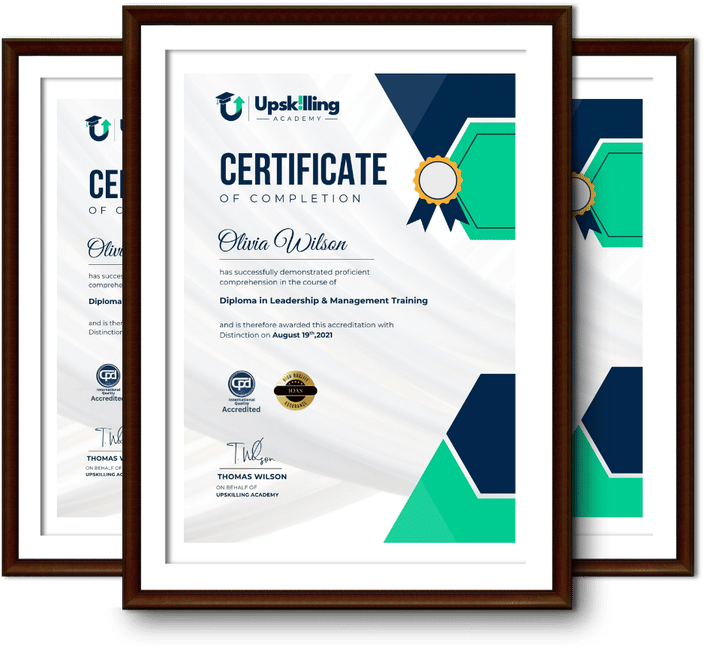
Framed Upskilling Academy certificates of completion

Course Reviews

Christine Ferguson

My experience with you was fantastic and easy to navigate. I'm looking forward to taking the course.

Jesse Harding

Provided highly informative and helpful responses, with quick and efficient replies.

Gary Schwartz

The course selection is broad, engaging, easy to follow, and offers a good challenge.

Bailey Burrows

Excellent course with user-friendly website navigation, making it easy to follow. I'm really enjoying the experience.

Benjamin Moreno

Great course with valuable information. Easy to follow, and I appreciated the flexibility to work at my own pace.

Quality Accreditation

  • incensu Registered Education Supplier
  • Association of Healthcare Trainers member
  • The CPD Group approved provider #790985
  • Disability Confident Committed

FAQ for Quality Assurance Level 3 Course

How do I access my course?

Once you complete your purchase, you’ll receive access to your course through your Upskilling Academy account. You can log in and access your learning materials online at any time.

How long do I have access to the course?

Your access period depends on the course and the package you purchase. Please check the course details or your order information for the applicable access period.

Can I study at my own pace?

Yes. Upskilling Academy courses are designed to provide flexible online learning, allowing you to study at a pace that suits your schedule.

Will I receive a certificate?

Certificate availability varies by course. Where a certificate is included, you’ll receive information about the requirements and how to obtain it within the course or upon completion.

Are the courses suitable for beginners?

Many courses are suitable for beginners, while others may assume some previous knowledge. Please review the individual course description for information about the recommended level and prerequisites.