
Upskilling Academy
Trusted by 3 million learners 24/7 online training Money back guarantee Fully accredited courses
Level 3 Certificate in Preventing Contamination in the Laboratory Thumbnail Lifetime Access
Sale

Level 3 Certificate in Preventing Contamination in the Laboratory

Preventing Contamination in the Laboratory Overview Maintaining a contamination-free laboratory environment is crucial to ensuring the reliability of…

Best Seller Limited Time Offer
Last Updated 17 Oct 2026 352 Enrolled English Flexible Schedule

Access to 1500+ Courses with free CPD Certificates for Only £59 Get Now

What you will learn

  • - Learn essential techniques to minimize contamination risks in any laboratory setting
  • - Improve the accuracy and reliability of experimental results
  • - Protect yourself and colleagues from potential hazards
  • - Develop proper procedures for handling samples, reagents, and equipment
  • - Enhance your lab’s compliance with safety and quality standards
  • - Save time and resources by preventing costly mistakes and rework
  • - Boost your confidence in maintaining a clean and safe work environment

Description

Preventing Contamination in the Laboratory

Overview

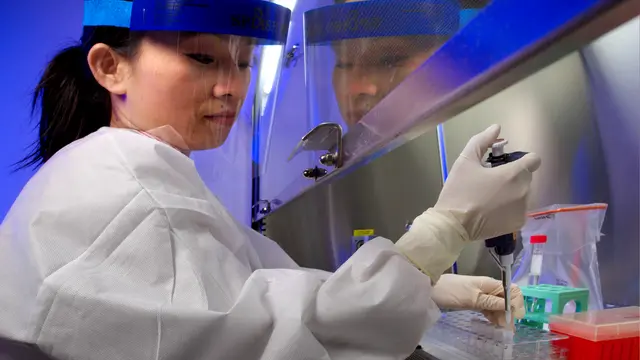
Maintaining a contamination-free laboratory environment is crucial to ensuring the reliability of results, the safety of personnel, and the success of scientific endeavors. The Preventing Contamination in the Laboratory course offers a comprehensive look at the methods, protocols, and best practices required to manage and mitigate contamination risks in various types of laboratory settings, including biological, chemical, and analytical labs. Through a blend of theoretical knowledge and practical guidelines, this course empowers learners to recognize potential contaminants, understand contamination routes, and implement robust preventative strategies.

Description

Laboratory contamination can compromise experiments, delay research progress, jeopardize regulatory compliance, and even threaten personal and environmental safety. This course is designed to provide both a broad-based understanding and actionable skills for contamination control in the laboratory setting.

Participants will explore the different forms of contamination—ranging from biological agents (such as bacteria, viruses, and fungi), chemical impurity, cross-sample interference, and physical contaminants (such as dust and particulates). The course covers contamination sources, detection methods, and the short- and long-term consequences of contamination events.

Key topics include:

  • Types of Contamination: Learn how to distinguish between biological, chemical, physical, and cross-contamination and why each requires a unique mitigation strategy.
  • Sources and Routes: Identify the most common vectors and sources of contaminants, such as personnel, equipment, consumables, ventilation systems, and laboratory workflow.
  • Best Practices and Protocols: Deploy international best practices, including cleanroom behaviors, personal protective equipment (PPE) use, sterilization techniques (autoclaving, filtration, UV treatment), and regular monitoring and validation.
  • Quality Control Measures: Design and implement effective quality assurance protocols to detect contamination early and prevent its spread, including good documentation practices and environmental monitoring.
  • Case Studies: Analyze real-world incidents of laboratory contamination, examine root cause analyses, and explore remediation strategies employed by industry experts.

Throughout the course, hands-on activities and scenario-based learning will reinforce the importance of standard operating procedures (SOPs), staff training, and the adoption of a contamination-prevention mindset as routine laboratory culture. The lessons are designed for easy adaptation across varied disciplines, from academic and medical to industrial and research laboratories.

Career Path

Completing Preventing Contamination in the Laboratory opens up several career-enhancing opportunities for laboratory professionals, researchers, and technical staff. Mastery of contamination prevention is considered a core competency in many science-driven industries and can significantly boost employability and advancement. Potential career pathways include:

  • Laboratory Manager/Supervisor: Oversee day-to-day operations, supervise implementation of contamination control standards, and lead safety initiatives.
  • Quality Assurance/Quality Control Analyst: Design and manage protocols for contamination detection, monitoring, and reporting.
  • Research Scientist/Technician: Ensure the integrity of research activities by applying advanced contamination-prevention skills.
  • Compliance Officer: Monitor adherence to regulatory requirements in pharmaceutical, biomedical, or food science industries.
  • Biosafety/Biosecurity Specialist: Devise strategies to minimize biological hazards and contamination risks in high-level containment facilities.

Professionals who complete this course will be well-positioned to contribute to safe, efficient, and reliable laboratory operations, often becoming key resources for training and maintaining high standards within their organizations.

Who Is This Course For?

This course is suitable for anyone involved in laboratory work who is responsible for generating or overseeing reliable experimental data and maintaining a safe working environment. This includes, but is not limited to:

  • Laboratory technicians and assistants
  • Scientific researchers (in academic, government, or private industry settings)
  • Laboratory managers and supervisors
  • Quality assurance and quality control personnel
  • Healthcare and medical laboratory professionals
  • Graduate students, postdocs, and early-career researchers seeking foundational or refresher knowledge
  • Regulatory compliance professionals and biosafety officers

Whether you are new to laboratory science or looking to deepen your expertise, this course offers value to individuals and organizations aiming to bolster data integrity, comply with stringent industry standards, and foster a culture of cleanliness and responsibility.

Requirements

Participants should have a basic understanding of laboratory operations and scientific methodology. While no advanced prerequisites are required, familiarity with standard laboratory equipment and basic safety protocols will enable faster assimilation of key concepts.

  • Educational Background: High school diploma, secondary school completion, or equivalent. Prior exposure to biology, chemistry, or a related science is beneficial.
  • Technical Skills: Capability to use standard laboratory tools and follow written procedures.
  • Language: Proficiency in English to engage fully with written and verbal course material.
  • Access to a Laboratory Setting (optional): While not mandatory, access to a laboratory will help participants practice and contextualize skills and guidelines presented during the course.
  • Internet Access: Required for online course delivery, participation in discussions, and interaction with digital course content.

The course is structured for flexibility, enabling both in-person and remote learners to benefit. All training materials and activities are designed to be applicable across a variety of laboratory environments.

Course Curriculum

Course Content

Module 1_ Introduction to Laboratory Contamination

  • Lesson 1_ Introduction to Laboratory Contamination

Module 2_ Laboratory Design and Layout

Module 3_ Personal Protective Equipment (PPE)

Module 4_ Equipment and Instrumentation

Module 5_ Good Laboratory Practices (GLP)

Module 6_ Environmental Monitoring

Module 7_ Chemical and Biological Safety

Who should take the course

  • - Laboratory technicians working in medical or research labs
  • - Students studying laboratory sciences or biomedical fields
  • - Laboratory managers responsible for quality control
  • - Scientists and researchers handling sensitive experiments
  • - Lab assistants and support staff involved in sample preparation
  • - Clinical staff processing patient samples in hospital labs
  • - New employees onboarding in laboratory environments

Certificate for Success at Every Step

  • No expiry date. You can keep and use the certificate forever.
  • Recognised across various UK industries.
  • Increases your chances of employability.
  • Boosts your professional credibility.
  • Shows you're up to date with industry knowledge.
Framed Upskilling Academy certificates of completion

Course Reviews

Christine Ferguson

My experience with you was fantastic and easy to navigate. I'm looking forward to taking the course.
Jesse Harding

Provided highly informative and helpful responses, with quick and efficient replies.

Gary Schwartz

The course selection is broad, engaging, easy to follow, and offers a good challenge.

Bailey Burrows

Excellent course with user-friendly website navigation, making it easy to follow. I'm really enjoying the experience.

Benjamin Moreno

Great course with valuable information. Easy to follow, and I appreciated the flexibility to work at my own pace.

Quality Accreditation

  • incensu Registered Education Supplier
  • Association of Healthcare Trainers member
  • The CPD Group approved provider #790985
  • Disability Confident Committed

FAQ for Level 3 Certificate in Preventing Contamination in the Laboratory

How do I access my course?

Once you complete your purchase, you’ll receive access to your course through your Upskilling Academy account. You can log in and access your learning materials online at any time.

How long do I have access to the course?

Your access period depends on the course and the package you purchase. Please check the course details or your order information for the applicable access period.

Can I study at my own pace?

Yes. Upskilling Academy courses are designed to provide flexible online learning, allowing you to study at a pace that suits your schedule.

Will I receive a certificate?

Certificate availability varies by course. Where a certificate is included, you’ll receive information about the requirements and how to obtain it within the course or upon completion.

Are the courses suitable for beginners?

Many courses are suitable for beginners, while others may assume some previous knowledge. Please review the individual course description for information about the recommended level and prerequisites.

