Upskilling Academy
Trusted by 3 million learners 24/7 online training Money back guarantee Fully accredited courses
Level 3 Certificate in Introduction to Leatherworking Thumbnail Lifetime Access
Sale

Level 3 Certificate in Introduction to Leatherworking

Introduction to Leatherworking Overview Leatherworking is an enduring craft, seamlessly combining functionality with artistic expression. From ancient civilizations…

Best Seller Limited Time Offer
Last Updated 24 Sep 2026 352 Enrolled English Flexible Schedule

Access to 1500+ Courses with free CPD Certificates for Only £99 Get Now

What you will learn

  • - Gain hands-on experience with essential leatherworking tools and materials
  • - Create your own functional and decorative leather items from start to finish
  • - Develop practical skills that can be applied to hobbies or small business ventures
  • - Build confidence in designing, cutting, stitching, and finishing leather goods
  • - Learn fundamental techniques used by professional leathercrafters
  • - Understand how to care for and maintain leather projects for lasting quality
  • - Join a supportive community of fellow beginners to share ideas and inspiration

Description

Introduction to Leatherworking

Overview

Leatherworking is an enduring craft, seamlessly combining functionality with artistic expression. From ancient civilizations to modern fashion and utility gear, leather has been a favored material for artisans and practical makers alike. The course Introduction to Leatherworking offers participants a comprehensive journey into the fundamentals of working with leather, utilizing both traditional and contemporary techniques. Over several engaging modules, students will explore the various tools, materials, and processes integral to leathercraft, developing both creative and technical skills applicable to a wide array of projects.

Description

This course is designed to demystify the leatherworking process for complete beginners while offering deep insight into underlying concepts for more experienced DIY enthusiasts. The curriculum is structured to combine theoretical knowledge with practical application, ensuring students not only understand the properties and types of leather but also confidently take on hands-on projects by course completion.

During the course, students will:

  • Explore Leather Types and Selection: Learn to distinguish between vegetable-tanned, chrome-tanned, full-grain, top-grain, and genuine leather, as well as specialty leathers. Discussions will cover ethical sourcing and environmental considerations.
  • Master Essential Tools and Techniques: Familiarize yourself with tools such as awls, mallets, knives, edge bevelers, and stitching chisels. Practice tool safety, basic maintenance, and correct technique for cutting, pattern tracing, punching, and more.
  • Design and Prepare Patterns: Understand pattern-reading, drafting your own custom designs, and learning traditional and modern pattern transfer strategies.
  • Construction Methods: Delve into methods for hand-stitching (including saddle stitching), riveting, edging, and burnishing. Learn the essentials of dyeing, painting, embossing, and basic tooling for personalized finishes.
  • Project Work: Complete a series of guided projects such as a card holder, belt, and small pouch, then progress to designing a personal item—applying newly acquired skills to realize your own creative vision.
  • Caring for Finished Products: Learn proper finishing, sealing, and maintenance techniques to ensure longevity and professional quality in your leather goods.

By the end, students will have a toolkit of knowledge and practical experience, opening the door to more advanced techniques or independent creative exploration.

Career Path

Leatherworking skills are in demand across a spectrum of industries, making this craft a valuable asset for a range of creative and professional pursuits. Graduates of this course may consider the following career and vocational pathways:

  • Artisan Leatherworker: Produce bespoke leather goods such as wallets, belts, bags, and accessories for sale at markets, online, or through bespoke commissions.
  • Accessory and Fashion Designer: Bring an artisanal understanding of leather to the design and manufacture of premium bags, shoes, and wearable accessories.
  • Costume and Props Artisan: Apply leatherworking techniques in theatrical, film, or cosplay industries, crafting durable and authentic costume pieces and props.
  • Repair and Restoration Specialist: Restore vintage or high-quality leather goods, shoes, saddles, and furniture by leveraging hands-on repair skills.
  • Entrepreneur: Start a small business or brand, utilizing original designs and handmade products to carve a niche in artisan or bespoke markets.
  • Craft Educator: With further study, teach foundational or advanced leatherworking skills in workshops, community centers, or online platforms.

This course lays the groundwork for anyone interested in creative entrepreneurship or those hoping to enter industries where hands-on technical know-how offers a competitive edge.

Who Is This Course For?

Introduction to Leatherworking is ideal for:

  • Complete Beginners: No prior experience with leather or crafting is required; all essential concepts and processes are introduced from the ground up.
  • DIY Makers and Hobbyists: Those who enjoy working with their hands, appreciate craftsmanship, and wish to expand their skill set beyond wood, fabric, or metal.
  • Aspiring Artisans and Designers: Individuals contemplating a career in fashion, product design, accessory creation, or any hands-on creative field.
  • Artists and Creative Professionals: Those seeking to incorporate a new material or technique into their artistic practice, whether for utility or aesthetics.
  • Entrepreneurs: Participants interested in launching or scaling a brand featuring bespoke or small-batch artisan products.
  • Educators: Teachers looking to add a practical, tactile component to workshops, art classes, or enrichment activities.

Regardless of your background, the welcoming and structured nature of this course ensures that everyone leaves with newfound confidence and creative inspiration.

Requirements

  • Materials: A basic toolkit list will be provided ahead of the course, including essential items such as a utility knife, ruler, leather needles, waxed thread, awl, and starter pack of vegetable-tanned leather. Optional embellishment tools (for dyeing, embossing, or hardware) are recommended but not required at the outset.
  • Workspace: Access to a clean, well-lighted surface large enough to safely cut and assemble small to medium-sized projects.
  • Safety Supplies: Cutting gloves and eye protection are advised, especially for absolute beginners working with knives or other sharp tools.
  • Time Commitment: The course is designed for flexible completion (live or self-directed), with an estimated 30 hours for core modules and additional time allocated for project work and practice.
  • Interest and Curiosity: Most importantly, an open mind and willingness to learn—creativity and patience will be your biggest assets as you develop and refine your new skills.

All other reading materials, video demonstrations, pattern templates, and resource lists will be provided digitally. Assistance with sourcing materials locally and online will be made available through our resource hub and instructor Q&A.

Course Curriculum

Course Content

Module 1 – Introduction to Leatherworking

  • Lesson 1 – Introduction to Leatherworking

Module 2 – Leather Selection and Preparation

Module 3 – Basic Leather Working Techniques

Module 4 – Hand Stitching and Sewing

Module 5 – Leather Tooling and Stamping

Module 6- Leather Molding and Shaping

Module 7 – Leather Dyeing and Finishing

Who should take the course

  • - Beginners who want to learn the basics of leatherworking
  • - Hobbyists interested in crafting leather goods
  • - DIY enthusiasts looking to expand their creative skills
  • - Artists and crafters exploring new materials
  • - Small business owners or aspiring entrepreneurs wanting to make handmade leather items
  • - Students or adults seeking a new, hands-on activity
  • - Gift makers wanting to create personalized leather gifts

Certificate for Success at Every Step

  • No expiry date. You can keep and use the certificate forever.
  • Recognised across various UK industries.
  • Increases your chances of employability.
  • Boosts your professional credibility.
  • Shows you're up to date with industry knowledge.
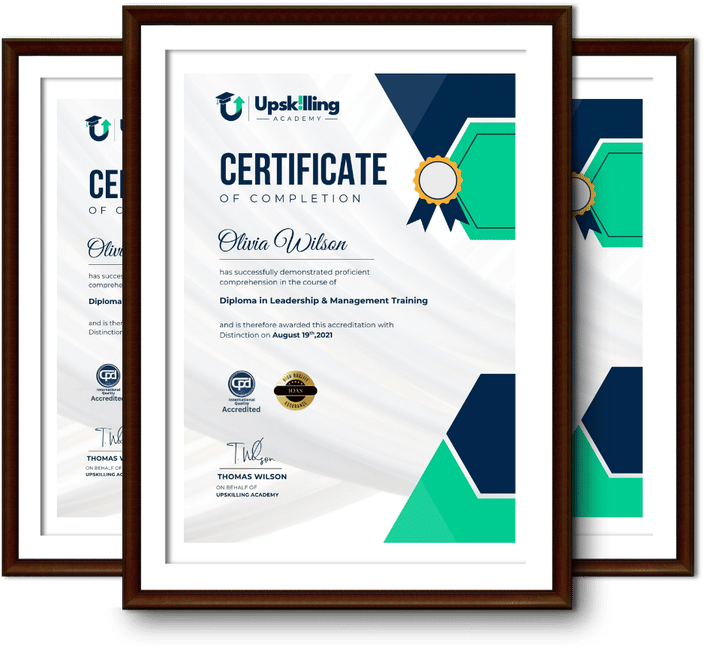
Framed Upskilling Academy certificates of completion

Course Reviews

Christine Ferguson

My experience with you was fantastic and easy to navigate. I'm looking forward to taking the course.

Jesse Harding

Provided highly informative and helpful responses, with quick and efficient replies.

Gary Schwartz

The course selection is broad, engaging, easy to follow, and offers a good challenge.

Bailey Burrows

Excellent course with user-friendly website navigation, making it easy to follow. I'm really enjoying the experience.

Benjamin Moreno

Great course with valuable information. Easy to follow, and I appreciated the flexibility to work at my own pace.

Quality Accreditation

  • incensu Registered Education Supplier
  • Association of Healthcare Trainers member
  • The CPD Group approved provider #790985
  • Disability Confident Committed

FAQ for Level 3 Certificate in Introduction to Leatherworking

How do I access my course?

Once you complete your purchase, you’ll receive access to your course through your Upskilling Academy account. You can log in and access your learning materials online at any time.

How long do I have access to the course?

Your access period depends on the course and the package you purchase. Please check the course details or your order information for the applicable access period.

Can I study at my own pace?

Yes. Upskilling Academy courses are designed to provide flexible online learning, allowing you to study at a pace that suits your schedule.

Will I receive a certificate?

Certificate availability varies by course. Where a certificate is included, you’ll receive information about the requirements and how to obtain it within the course or upon completion.

Are the courses suitable for beginners?

Many courses are suitable for beginners, while others may assume some previous knowledge. Please review the individual course description for information about the recommended level and prerequisites.