
Christine Ferguson
My experience with you was fantastic and easy to navigate. I'm looking forward to taking the course.
 Lifetime Access
International Relations Overview International Relations is a multidisciplinary academic field that explores the complexity of global politics, economics,…
Access to 1500+ Courses with free CPD Certificates for Only £99 Get Now
International Relations is a multidisciplinary academic field that explores the complexity of global politics, economics, security, law, and culture in an increasingly interconnected world. This course offers students a comprehensive understanding of how states, organizations, and individuals interact across borders, the factors that influence their behavior, and the consequences of their decisions. From peace negotiations and economic treaties to security alliances and transnational challenges, International Relations is critical for grasping the dynamics that shape our world today. Whether you are interested in diplomatic service, business, policy analysis, or journalism, this course will equip you with the knowledge and analytical tools to excel.
The International Relations course is designed to provide students with both foundational theories and practical insights into global affairs. Beginning with an exploration of the principal theories of international relations—Realism, Liberalism, Constructivism, Marxism, and Feminism—you will analyze their varying perspectives on issues such as war, peace, power, and cooperation. The curriculum delves into the historical evolution of the international system, the role of nation-states, and the significance of non-state actors such as intergovernmental organizations, multinational corporations, NGOs, and transnational networks.
Key topics include the analysis of international conflict and security dilemmas, strategies for maintaining peace and resolving disputes, the impact of globalization on economies and cultures, human rights advocacy and humanitarian intervention, as well as the influence of emerging technologies and environmental concerns on international policy. The course uses case studies such as the United Nations, European Union, NATO, climate change negotiations, regional conflicts, and the rise of China and India to illustrate key concepts and debates.
Students will engage in debates, simulations (such as Model United Nations), policy brief writing, and critical examinations of real-world crises. Interactive lectures, guest speakers from the fields of diplomacy, policy, and research, as well as group projects, will foster collaboration and deepen understanding. By the end of the course, students will be able to critically assess international events, identify patterns and trends, and propose strategies for conflict resolution and cooperation.
A grounding in International Relations opens the doors to a wide array of career opportunities in both the public and private sectors. Graduates of this course can pursue dynamic and impactful roles, such as:
The analytical, research, and communication skills developed in this course will serve as a strong foundation for leadership roles across sectors engaging with global affairs.
This course is ideal for a wide range of learners who seek to understand and influence the complex processes that define our globalized world. It is particularly suited for:
No matter your background, if you are curious about how the world works at the international level, this course will provide you with the theoretical knowledge and practical skills to interpret and engage with key global issues.
This course is designed to be inclusive and supportive, catering to diverse academic backgrounds and professional aspirations. Enthusiasm, curiosity, and a willingness to engage with complex global issues will ensure a rewarding learning experience.
My experience with you was fantastic and easy to navigate. I'm looking forward to taking the course.
Provided highly informative and helpful responses, with quick and efficient replies.
The course selection is broad, engaging, easy to follow, and offers a good challenge.
Excellent course with user-friendly website navigation, making it easy to follow. I'm really enjoying the experience.
Great course with valuable information. Easy to follow, and I appreciated the flexibility to work at my own pace.



Once you complete your purchase, you’ll receive access to your course through your Upskilling Academy account. You can log in and access your learning materials online at any time.
Your access period depends on the course and the package you purchase. Please check the course details or your order information for the applicable access period.
Yes. Upskilling Academy courses are designed to provide flexible online learning, allowing you to study at a pace that suits your schedule.
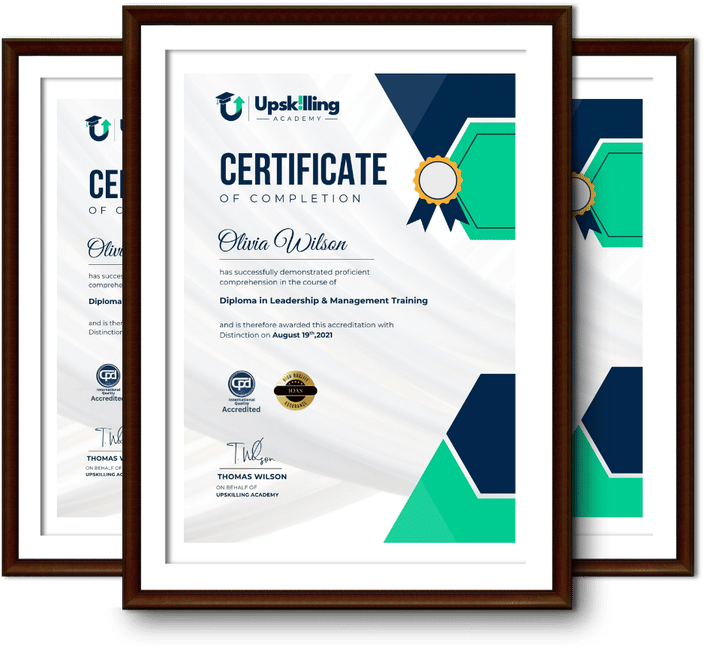
Certificate availability varies by course. Where a certificate is included, you’ll receive information about the requirements and how to obtain it within the course or upon completion.
Many courses are suitable for beginners, while others may assume some previous knowledge. Please review the individual course description for information about the recommended level and prerequisites.