Upskilling Academy
Trusted by 3 million learners 24/7 online training Money back guarantee Fully accredited courses
Level 3 Certificate in Genealogy Thumbnail Lifetime Access
Sale

Level 3 Certificate in Genealogy

Genealogy Overview Genealogy, the study of family history and lineage, is a fascinating discipline that bridges the past…

Best Seller Limited Time Offer
Last Updated 17 Sep 2026 352 Enrolled English Flexible Schedule

Access to 1500+ Courses with free CPD Certificates for Only £99 Get Now

What you will learn

  • - Discover your family history and ancestral roots
  • - Learn effective tools and methods for tracing genealogical records
  • - Build a detailed family tree to preserve your heritage
  • - Gain skills in interpreting historical documents and archives
  • - Connect with relatives and uncover family stories
  • - Develop research and critical thinking abilities
  • - Contribute to your family's legacy for future generations

Description

Genealogy

Overview

Genealogy, the study of family history and lineage, is a fascinating discipline that bridges the past and present, connecting individuals to their ancestral roots. This comprehensive course is designed to introduce students to the techniques, resources, and reasoning skills needed to construct family trees, interpret historical records, and appreciate the broader social and cultural context of their ancestors’ lives. Whether your interest is personal, academic, or professional, this course lays the groundwork for exploring family history with confidence and curiosity while developing robust research skills that extend beyond the genealogy field.

Description

This Genealogy course unfolds in a structured, accessible manner, taking students from the foundational concepts of family history research to advanced genealogical methods. The curriculum covers the following core areas:

  • Genealogical Fundamentals: Understand the key terminology, concepts, and purpose of genealogy. Learn the principles of sound genealogical research, including the genealogical proof standard and ethical considerations.
  • Record Types and Sources: Delve into primary and secondary sources, including census records, vital records (birth, marriage, death), immigration and naturalization documents, military files, church registers, land and probate records, and more. Discover how to evaluate the reliability and context of each source.
  • Research Methodologies: Develop step-by-step research strategies. Learn how to organize your findings using charts, family group sheets, and genealogy software. Practice source citation, note-taking, and critical analysis of conflicting evidence.
  • DNA and Genetic Genealogy: Explore the role of DNA testing in genealogy. Understand how DNA results can corroborate or challenge traditional research, how to interpret matches, and how to apply genetic evidence in building and confirming family lines.
  • Storytelling and Context: Move beyond names and dates to reconstruct family narratives. Uncover the social, economic, and historical settings that shaped your ancestors’ lives, and learn how to present your research in compelling, ethical, and respectful ways.
  • Technology and Online Tools: Gain familiarity with leading genealogy databases, software, online archives, and collaborative tools. Learn how to leverage digital resources for both local and international research.

Throughout the course, students will participate in practical projects, researching their own family history, analyzing case studies, and collaborating with peers. By the end, learners will have developed an actionable research plan, compiled a basic family tree, and gained insight into continuing their genealogical journey.

Career Path

Genealogy offers a range of career opportunities and enriching pathways, including, but not limited to:

  • Professional Genealogist: Conduct family history research for private clients, assisting with ancestry discoveries, lineage verification, or complex brick wall cases.
  • Researcher and Historian: Work in museums, libraries, archives, cultural heritage organizations, or academic institutions as a specialist in family and local history.
  • Genetic Genealogist: Combine traditional genealogical research with DNA analysis to help adoptees, solve historical mysteries, or contribute to forensic investigations.
  • Author and Storyteller: Write books, articles, or blogs about genealogy, family histories, and historical context, either for publication or for private family distribution.
  • Lecturer and Educator: Teach genealogy courses and workshops, mentor budding genealogists, or present at conferences and community events.
  • Corporate and Ancestral Tourism Consultant: Design family history tours, work with travel companies, or assist clients in discovering their heritage in ancestral homelands.

Skills developed in genealogy—such as research, evidence evaluation, critical thinking, and project management—are transferable to numerous allied fields, including journalism, law, anthropology, and archival science.

Who Is This Course For?

This course is suitable for a wide array of learners, such as:

  • Beginners eager to explore their family history for the first time, with no prior experience required.
  • Intermediate genealogists seeking to refine techniques, understand new resources, or integrate DNA in their research.
  • Librarians, archivists, and local historians wishing to broaden their service offerings and enhance their research toolkit.
  • Teachers, writers, and storytellers who want to add family or community history projects to their repertoire.
  • Anyone passionate about culture, history, migration, and identity who wishes to strengthen their connection to the past.

Whether your goal is to uncover the untold stories of your family, lay the groundwork for a professional genealogy career, or simply feed your curiosity about the past, this course provides the essential skills and knowledge to guide you on your journey.

Requirements

To get the most from this course, students should be prepared to:

  • Access a computer or tablet with a reliable internet connection for online research and coursework.
  • Commit time each week to lessons, exercises, and research activities (approximately 3-4 hours recommended).
  • Be willing to communicate with family members, where possible, to collect oral histories and gather personal records.
  • Demonstrate curiosity, patience, and attention to detail, as genealogical research can require persistence and critical thinking.
  • No prior genealogical experience is required; however, basic computer literacy and familiarity with online searching will be helpful.

Optional but recommended: a notepad or digital device for taking notes, and a willingness to explore local archives or libraries may further enrich your learning experience.

Course Curriculum

Course Content

Chapter 1_ Why Explore Your Past

  • Chapter 1_ Why Explore Your Past

Chapter 2_ The Search For Answers

Chapter 3_ Modern Methods of Researching Your Past

Chapter 4_ Where to Start Searching

Chapter 5_ Search of Records

Chapter 6_ Conclusion

Who should take the course

  • - Beginners interested in tracing their family history
  • - Hobbyists looking to improve their genealogy research skills
  • - Students studying history, anthropology, or related subjects
  • - Adults wanting to preserve their family stories for future generations
  • - Librarians or archivists assisting patrons with genealogy research
  • - Anyone curious about their ancestral origins and heritage
  • - Teachers seeking resources for history or social studies classes

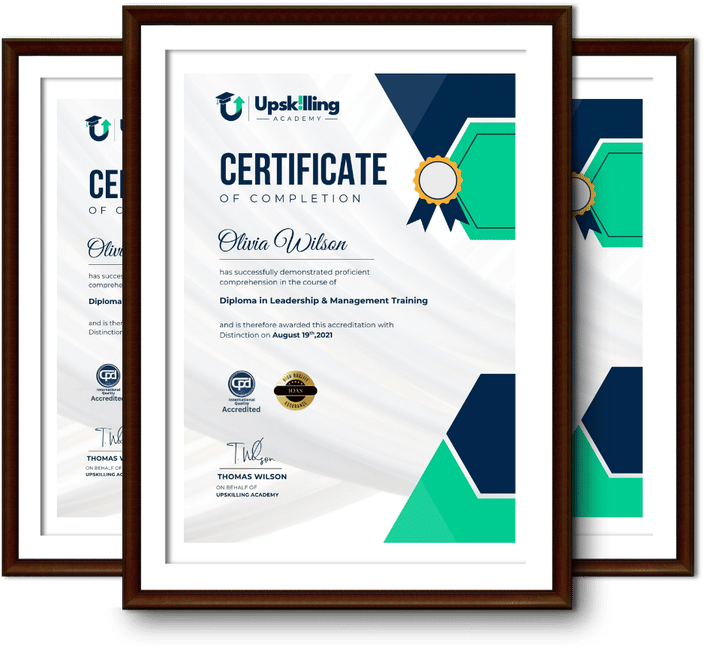
Certificate for Success at Every Step

  • No expiry date. You can keep and use the certificate forever.
  • Recognised across various UK industries.
  • Increases your chances of employability.
  • Boosts your professional credibility.
  • Shows you're up to date with industry knowledge.
Framed Upskilling Academy certificates of completion

Course Reviews

Christine Ferguson

My experience with you was fantastic and easy to navigate. I'm looking forward to taking the course.
Jesse Harding

Provided highly informative and helpful responses, with quick and efficient replies.

Gary Schwartz

The course selection is broad, engaging, easy to follow, and offers a good challenge.

Bailey Burrows

Excellent course with user-friendly website navigation, making it easy to follow. I'm really enjoying the experience.

Benjamin Moreno

Great course with valuable information. Easy to follow, and I appreciated the flexibility to work at my own pace.

Quality Accreditation

  • incensu Registered Education Supplier
  • Association of Healthcare Trainers member
  • The CPD Group approved provider #790985
  • Disability Confident Committed

FAQ for Level 3 Certificate in Genealogy

How do I access my course?

Once you complete your purchase, you’ll receive access to your course through your Upskilling Academy account. You can log in and access your learning materials online at any time.

How long do I have access to the course?

Your access period depends on the course and the package you purchase. Please check the course details or your order information for the applicable access period.

Can I study at my own pace?

Yes. Upskilling Academy courses are designed to provide flexible online learning, allowing you to study at a pace that suits your schedule.

Will I receive a certificate?

Certificate availability varies by course. Where a certificate is included, you’ll receive information about the requirements and how to obtain it within the course or upon completion.

Are the courses suitable for beginners?

Many courses are suitable for beginners, while others may assume some previous knowledge. Please review the individual course description for information about the recommended level and prerequisites.