
Christine Ferguson
My experience with you was fantastic and easy to navigate. I'm looking forward to taking the course.
 Lifetime Access
Gas Engineering Overview Gas Engineering is an essential and dynamic branch of engineering focused on the exploration, extraction,…
Access to 1500+ Courses with free CPD Certificates for Only £99 Get Now
Gas Engineering is an essential and dynamic branch of engineering focused on the exploration, extraction, processing, transportation, storage, and distribution of natural gas and other gaseous fuels. As the world moves towards cleaner and more efficient energy sources, the role of skilled gas engineers is more critical than ever. This comprehensive course is designed to equip learners with a robust understanding of the scientific, technical, environmental, and economic principles underlying the gas industry, addressing both traditional natural gas and emerging industries such as hydrogen and biogas.
This course provides a balanced integration of theoretical foundations, practical skills, and industry-oriented problem-solving, preparing students to thrive in the evolving landscape of the global energy sector. The curriculum is mapped to real-world applications and considers industry trends, technological advancements, regulatory frameworks, and sustainable approaches to gas engineering.
The Gas Engineering course is meticulously structured to cover a broad spectrum of topics relevant to modern gas industries. Each module is carefully designed to bridge academic learning with real-world application. Students will begin with foundational concepts of gas properties, thermodynamics, and fluid mechanics, establishing the critical scientific base required for advanced study. The course then advances into more specialized subjects, such as the design and operation of gas pipelines, processing plants, storage facilities, and distribution networks.
A significant portion of the course is dedicated to the technological processes that enable the safe and efficient handling of gases. This includes extensive coverage of gas purification, compression, liquefaction, and transport, as well as the technologies underpinning CNG (Compressed Natural Gas) and LNG (Liquefied Natural Gas) systems. Students will also delve into the environmental and safety aspects central to gas handling, learning about risk assessment, regulatory standards, and the implementation of best safety practices.
With sustainability at the core, modules on renewable gases such as biogas and hydrogen explore the role of gas in the global transition to greener energy. Through hands-on projects, case studies, and simulation exercises using industry-standard software, students sharpen their analytical, problem-solving, and decision-making skills.
Key topics include:
Throughout the course, students will engage in site visits, laboratory work, group projects, and seminars led by experienced gas professionals, ensuring well-rounded exposure to both academic and industrial perspectives.
Graduates of the Gas Engineering course find themselves well-positioned for rewarding professional opportunities within the energy sector. As the demand for skilled specialists in natural and renewable gas technologies rises worldwide, affiliated industries continue to expand both in size and complexity.
Potential career paths include:
Graduates may work for oil and gas exploration companies, pipeline firms, utility providers, government agencies, consulting firms, or pursue roles in the growing fields of hydrogen and biogas technology.
The Gas Engineering course is suitable for a diverse array of learners, including:
Whether pursuing advanced education, professional development, or personal interest, this course provides the comprehensive foundation necessary for success in gas engineering and related industries.
To ensure participants can fully benefit from the course, the following are the recommended prerequisites and requirements:
Some modules may require access to laboratory facilities or specialized simulation software (which will be provided or clearly indicated in advance). For online learners, a reliable internet connection is essential for accessing course materials, interactive sessions, and submitting assignments.
Ultimately, a strong motivation to learn and contribute to the future of energy systems is the most important requirement for success in this course.
My experience with you was fantastic and easy to navigate. I'm looking forward to taking the course.
Provided highly informative and helpful responses, with quick and efficient replies.
The course selection is broad, engaging, easy to follow, and offers a good challenge.
Excellent course with user-friendly website navigation, making it easy to follow. I'm really enjoying the experience.
Great course with valuable information. Easy to follow, and I appreciated the flexibility to work at my own pace.



Once you complete your purchase, you’ll receive access to your course through your Upskilling Academy account. You can log in and access your learning materials online at any time.
Your access period depends on the course and the package you purchase. Please check the course details or your order information for the applicable access period.
Yes. Upskilling Academy courses are designed to provide flexible online learning, allowing you to study at a pace that suits your schedule.
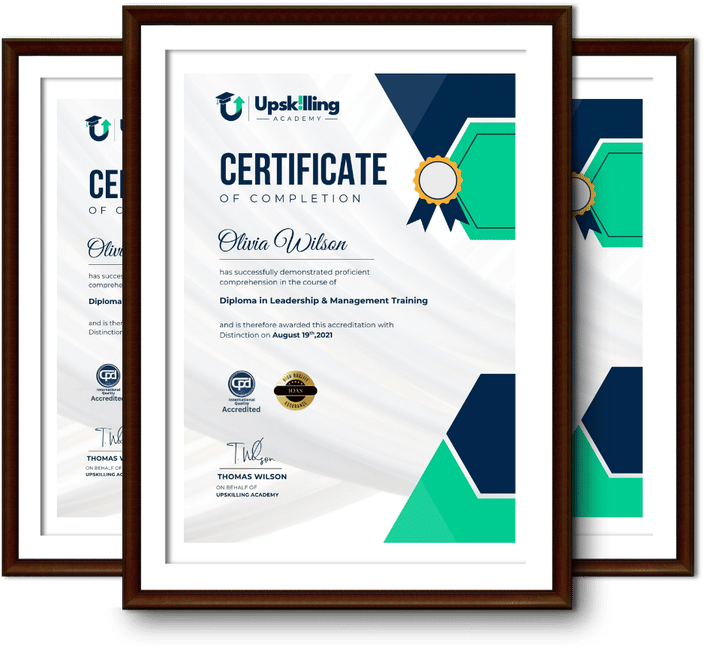
Certificate availability varies by course. Where a certificate is included, you’ll receive information about the requirements and how to obtain it within the course or upon completion.
Many courses are suitable for beginners, while others may assume some previous knowledge. Please review the individual course description for information about the recommended level and prerequisites.