
Upskilling Academy
Trusted by 3 million learners 24/7 online training Money back guarantee Fully accredited courses
Forensic Science Level 3 Course Thumbnail Lifetime Access
Sale

Forensic Science Level 3 Course

Forensic Science Overview Forensic Science is a rapidly evolving field that blends scientific knowledge with investigative techniques to…

Best Seller Limited Time Offer
Last Updated 17 Sep 2026 352 Enrolled English Flexible Schedule

Access to 1500+ Courses with free CPD Certificates for Only £99 Get Now

What you will learn

  • - Gain a deep understanding of scientific techniques used in crime scene investigation
  • - Develop critical thinking and analytical skills by solving real-world forensic cases
  • - Improve attention to detail through hands-on experiments and practical exercises
  • - Enhance your career prospects in law enforcement, criminology, and laboratory sciences
  • - Learn how to interpret and present forensic evidence in legal settings
  • - Stay updated with the latest advancements and technologies in forensic science
  • - Build teamwork and communication skills by collaborating on group projects and mock investigations

Description

Forensic Science

Overview

Forensic Science is a rapidly evolving field that blends scientific knowledge with investigative techniques to assist in solving crimes, administering justice, and upholding the law. This comprehensive course offers students an in-depth exploration of the critical principles, methods, and technologies used in modern forensic investigations. Through a fusion of theoretical content, hands-on experiments, and case study analyses, learners will gain an appreciation of the interdisciplinary nature of forensics, drawing upon biology, chemistry, physics, medicine, and law to uncover, analyze, and interpret evidence.

With crime rates and new forms of criminal activity on the rise, the demand for highly skilled forensic scientists continues to grow. This course provides a well-rounded education designed to prepare students, not only for the technical aspects of forensic work but also the ethical and legal responsibilities inherent to the profession.

Description

The Forensic Science course serves as a gateway into the fascinating world of crime laboratories, crime scene investigations, and the justice system. Students will embark on a journey through the essential aspects of forensic science, beginning with its history and development and advancing toward complex practical applications in the real world. The curriculum encompasses the scientific principles and laboratory techniques employed in evidence detection, collection, preservation, and analysis.

Key topics covered throughout this course include:

  • Introduction to Forensic Science: The origins, scope, and significance of forensic science in criminal investigations and the judicial process.
  • Crime Scene Investigation: Fundamental procedures for arriving at, preserving, documenting, and processing crime scenes, including evidence search, collection, and chain of custody protocols.
  • Types of Evidence: Examination and classification of physical, biological, chemical, and digital evidence such as DNA, fingerprints, trace materials, firearms, toxicology, and cyber evidence.
  • Analytical Techniques: Instruction in key scientific procedures—such as chromatography, spectroscopy, microscopy, serology, and DNA profiling—that are essential in forensic work.
  • Legal and Ethical Considerations: Overview of the role of forensic scientists in the courtroom, including expert testimony, legal standards for admissibility (Daubert, Frye), and ethical obligations.
  • Case Studies: Analysis of landmark forensic cases that have shaped the field and the public’s understanding, emphasizing critical thinking and problem-solving skills.

Interactive laboratory exercises and virtual simulations will reinforce lecture material and provide practical experience in handling forensic evidence. Additionally, students will engage in group projects and discussions focused on emerging technologies and current challenges within the realm of forensic science.

By the end of the course, participants will possess a broad-based technical knowledge and a set of analytical skills that are applicable across various forensic disciplines and related careers.

Career Path

Forensic Science is a cornerstone of modern criminal justice, offering a dynamic and rewarding career path for those interested in the application of science and technology to societal challenges. Graduates of this course will be well-positioned for a variety of roles in both public and private sectors. Potential career opportunities include:

  • Forensic Scientist: Working in crime laboratories, analyzing physical and biological evidence to support criminal investigations.
  • Crime Scene Investigator (CSI): Collecting, photographing, and preserving evidence at crime scenes for further laboratory analysis.
  • Forensic Pathologist or Medical Examiner Assistant: Assisting in autopsies to determine causes of death and collect medical evidence.
  • DNA Analyst: Specializing in DNA extraction, profiling, and matching for both criminal justice and paternity cases.
  • Forensic Toxicologist: Detecting and interpreting the presence of drugs, alcohol, and other toxins in biological samples.
  • Digital Forensics Specialist: Investigating cybercrime and recovering data from digital devices for use in criminal and civil proceedings.
  • Law Enforcement and Legal Careers: Assisting police agencies, attorneys, and courts as forensic consultants or expert witnesses.
  • Academic and Research Positions: Contributing to scientific advancements and innovations in forensic methodology.

Emerging areas such as forensic psychology, environmental forensics, and wildlife forensics are constantly expanding the breadth of potential careers, making this field a dynamic and future-proof choice for scientifically minded individuals with a passion for justice and problem-solving.

Who Is This Course For?

This Forensic Science course is specifically tailored to suit a wide range of learners, including:

  • High school and undergraduate students considering a degree or profession in science, criminal justice, or law enforcement.
  • Current or aspiring professionals in law enforcement, legal fields, or the judiciary who seek to broaden their understanding of forensic techniques and terminology.
  • Science educators interested in incorporating forensic concepts and methods into their teaching repertoire.
  • Lifelong learners and true crime enthusiasts captivated by the intersection of science and the law.
  • Technical professionals aiming to transition into forensic laboratory work or digital forensics.

The course is designed to be accessible to all learners, regardless of prior experience in forensic science. Enthusiasm for scientific inquiry, attention to detail, and critical thinking are the most valuable prerequisites.

Requirements

To ensure a rewarding and successful learning experience, students should come prepared with the following:

  • Academic Background: A basic understanding of high school level biology, chemistry, and physics is highly recommended to fully grasp the scientific content of the course.
  • Technical Skills: Familiarity with laboratory safety procedures and standard equipment is helpful but not mandatory, as foundational skills will be taught in the course.
  • Technological Access: Reliable internet access and a laptop or desktop computer are essential for engaging in virtual labs, simulations, and accessing course materials online.
  • Soft Skills: Strong observational abilities, a meticulous approach to detail, effective communication, and a collaborative mindset are important for group activities and assignments.
  • Commitment: A willingness to engage with challenging material, participate in hands-on projects, and attend laboratory or virtual sessions as scheduled.

No prior experience in forensic science is required; however, motivation to learn and contribute actively to discussions, experiments, and group activities will vastly enhance the educational experience.

Upon completion, students will have acquired a foundational expertise in forensic science and a toolkit of analytical, technical, and ethical skills relevant to both further study and immediate application in the field.

Course Curriculum

Course Content

Module 1-Forensic Science

  • Lesson 1-Forensic Science

Module 2-Forensic Science

Module 3-Forensic Science

Module 4-Forensic Science

Module 5-Forensic Science

Module 6-Forensic Science

Module 7-Forensic Science

Module 8-Forensic Science

Who should take the course

  • - High school students interested in science or law
  • - College students considering a career in criminal justice
  • - Professionals in law enforcement seeking specialized skills
  • - Teachers looking for supplemental material for science classes
  • - Individuals curious about crime scene investigation
  • - Paralegals or legal assistants wanting forensic knowledge
  • - True crime enthusiasts eager to understand real-life forensic methods

Certificate for Success at Every Step

  • No expiry date. You can keep and use the certificate forever.
  • Recognised across various UK industries.
  • Increases your chances of employability.
  • Boosts your professional credibility.
  • Shows you're up to date with industry knowledge.
Framed Upskilling Academy certificates of completion

Course Reviews

Christine Ferguson

My experience with you was fantastic and easy to navigate. I'm looking forward to taking the course.
Jesse Harding

Provided highly informative and helpful responses, with quick and efficient replies.

Gary Schwartz

The course selection is broad, engaging, easy to follow, and offers a good challenge.

Bailey Burrows

Excellent course with user-friendly website navigation, making it easy to follow. I'm really enjoying the experience.

Benjamin Moreno

Great course with valuable information. Easy to follow, and I appreciated the flexibility to work at my own pace.

Quality Accreditation

  • incensu Registered Education Supplier
  • Association of Healthcare Trainers member
  • The CPD Group approved provider #790985
  • Disability Confident Committed

FAQ for Forensic Science Level 3 Course

How do I access my course?

Once you complete your purchase, you’ll receive access to your course through your Upskilling Academy account. You can log in and access your learning materials online at any time.

How long do I have access to the course?

Your access period depends on the course and the package you purchase. Please check the course details or your order information for the applicable access period.

Can I study at my own pace?

Yes. Upskilling Academy courses are designed to provide flexible online learning, allowing you to study at a pace that suits your schedule.

Will I receive a certificate?

Certificate availability varies by course. Where a certificate is included, you’ll receive information about the requirements and how to obtain it within the course or upon completion.

Are the courses suitable for beginners?

Many courses are suitable for beginners, while others may assume some previous knowledge. Please review the individual course description for information about the recommended level and prerequisites.

Level 3 Certificate in Forensic Science Thumbnail Lifetime Access
Sale

Level 3 Certificate in Forensic Science

Forensic Science Overview Forensic Science is an interdisciplinary field that bridges the gap between science and the law.…

Best Seller Limited Time Offer
Last Updated 17 Sep 2026 352 Enrolled English Flexible Schedule

Access to 1500+ Courses with free CPD Certificates for Only £99 Get Now

What you will learn

  • - Gain a comprehensive understanding of crime scene investigation techniques
  • - Develop critical thinking and analytical skills essential for solving complex cases
  • - Learn how to collect, preserve, and analyze physical evidence
  • - Enhance your knowledge of laboratory methods used in forensic analysis
  • - Understand the legal aspects and ethical considerations in forensic science
  • - Improve your ability to communicate findings effectively in both written and verbal formats
  • - Prepare for careers in law enforcement, laboratory analysis, or further study in forensic-related fields

Description

Forensic Science

Overview

Forensic Science is an interdisciplinary field that bridges the gap between science and the law. Through a combination of biology, chemistry, physics, and investigative techniques, forensic science professionals analyze physical evidence and apply scientific knowledge to aid criminal investigations and civil litigation. This comprehensive course delves into the theory, practice, and ethical considerations surrounding the collection, analysis, and presentation of forensic evidence. Participants will explore core scientific disciplines while also gaining familiarity with the latest technologies and methodologies shaping the modern forensic laboratory.

Description

This course offers an in-depth exploration of forensic science, guiding learners from foundational principles to advanced analytical techniques. The curriculum is organized to provide both theoretical background and practical experience across diverse forensic domains, such as DNA analysis, toxicology, trace evidence, fingerprinting, and digital forensics. Students will examine real-world case studies, simulate laboratory experiments, and interact with seasoned professionals to develop a robust understanding of the forensic process from crime scene to courtroom.

Key topics include:

  • Foundations of Forensic Science: Understand the history, branches, and scope of forensic science.
  • Crime Scene Investigation: Learn procedures for securing and analyzing crime scenes, chain of custody, and evidence preservation.
  • Physical Evidence: Explore the identification, collection, and analysis of fingerprints, firearms, ballistics, and tool marks.
  • Biological Evidence & DNA: Delve into serology, DNA profiling, and forensic anthropology.
  • Chemical and Toxicological Analysis: Study the detection of drugs, poisons, explosives, and their effects.
  • Digital & Cyber Forensics: Examine methods used to retrieve and analyze digital evidence in cybercrimes.
  • Ethics and Legal Aspects: Understand the ethical challenges and legal standards in presenting forensic evidence.
  • Expert Testimony: Prepare to communicate scientific findings effectively in judicial settings.

Throughout the course, students will benefit from interactive modules, mock investigations, and practical assignments designed to simulate actual forensic work. The curriculum’s holistic approach ensures that graduates are not only technically proficient but also skilled at critical thinking, ethical decision-making, and problem-solving within the forensic context.

Career Path

A qualification in forensic science opens doors to a diverse range of career opportunities in both the public and private sectors. Graduates of this course may pursue positions such as:

  • Forensic Scientist or Analyst (within specialized labs or law enforcement agencies)
  • Crime Scene Investigator
  • Forensic Toxicologist
  • Digital Forensics Specialist
  • Forensic DNA Analyst
  • Forensic Anthropologist
  • Ballistics Expert
  • Forensic Consultant (private sector or independent practice)
  • Legal Advisor specializing in scientific evidence
  • Academic Researcher or Lecturer in Forensic Science

Additionally, this course lays a solid foundation for further postgraduate study in forensic science, forensic psychology, law, biomedical sciences, or related disciplines. The analytical and investigative skills developed here are highly valued across fields such as law enforcement, criminal justice, homeland security, environmental forensics, and beyond.

Who Is This Course For?

This course is tailored for:

  • Undergraduate and Graduate Students in science or criminal justice who wish to specialize or gain introductory expertise in forensic science.
  • Law Enforcement Personnel seeking to broaden their investigative skills or transition into forensic roles.
  • Legal Professionals—including lawyers, judges, and paralegals—who want a better understanding of scientific evidence and its applications in court.
  • Career Changers aiming to enter the forensic science field from other scientific or technical backgrounds.
  • Lifelong Learners and crime enthusiasts eager for a rigorous, academic take on how science supports justice.

No prior experience in forensic science is required, but a basic interest in science and investigation is highly recommended. Whether your goals are academic, professional, or personal curiosity, this course provides a solid grounding in both the concepts and real-world applications of forensic science.

Requirements

To successfully participate in and complete this course, students should meet the following prerequisites and technical requirements:

  • Educational Background: A high school diploma or equivalent with a basic knowledge of biology and chemistry is recommended. College-level coursework in any natural science or criminal justice is advantageous but not mandatory.
  • Technical Skills: Competence with standard office and internet applications (for accessing course materials, submitting assignments, and participating in simulated or virtual labs).
  • Language Proficiency: Proficiency in English (both written and spoken), as all instruction, materials, and assignments will be conducted in English.
  • Time Commitment: Willingness to dedicate 8–10 hours per week for lectures, readings, laboratory exercises, group discussions, and assessments.
  • Computer Access: A reliable computer or tablet with internet access is required to participate in online components, submit coursework, and access laboratory simulations.

Optional but encouraged:

  • Basic laboratory safety training or experience (if attending onsite labs)
  • A curious, analytical mindset and a commitment to ethical scientific practice

By meeting these requirements, students will be poised to extract maximum value from the course, developing the knowledge and skills to thrive in the forensic sciences and contribute meaningfully to the pursuit of justice.
Course Curriculum

Course Content

Module 1_ Introduction to Forensic Science

  • Lesson 1_ Introduction to Forensic Science

Module 2_ Crime Scene Investigation

Module 3_ Forensic Biology

Module 4_ Forensic Chemistry

Module 5_ Forensic Anthropology and Odontology

Who should take the course

  • - High school and college students interested in science
  • - Aspiring forensic scientists
  • - Law enforcement professionals
  • - Criminal justice majors
  • - Teachers seeking updated science materials
  • - Crime scene investigation enthusiasts
  • - Professionals in legal or law-related fields

Certificate for Success at Every Step

  • No expiry date. You can keep and use the certificate forever.
  • Recognised across various UK industries.
  • Increases your chances of employability.
  • Boosts your professional credibility.
  • Shows you're up to date with industry knowledge.
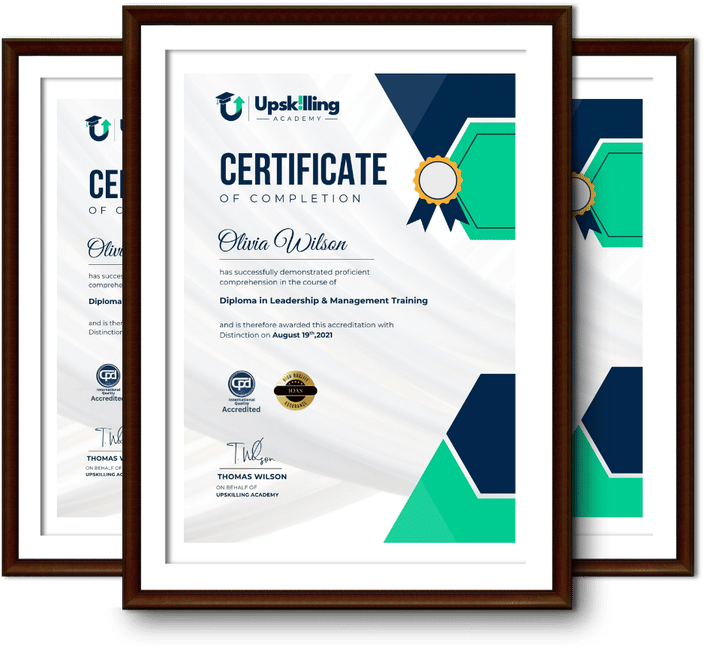
Framed Upskilling Academy certificates of completion

Course Reviews

Christine Ferguson

My experience with you was fantastic and easy to navigate. I'm looking forward to taking the course.

Jesse Harding

Provided highly informative and helpful responses, with quick and efficient replies.

Gary Schwartz

The course selection is broad, engaging, easy to follow, and offers a good challenge.

Bailey Burrows

Excellent course with user-friendly website navigation, making it easy to follow. I'm really enjoying the experience.

Benjamin Moreno

Great course with valuable information. Easy to follow, and I appreciated the flexibility to work at my own pace.

Quality Accreditation

  • incensu Registered Education Supplier
  • Association of Healthcare Trainers member
  • The CPD Group approved provider #790985
  • Disability Confident Committed

FAQ for Level 3 Certificate in Forensic Science

How do I access my course?

Once you complete your purchase, you’ll receive access to your course through your Upskilling Academy account. You can log in and access your learning materials online at any time.

How long do I have access to the course?

Your access period depends on the course and the package you purchase. Please check the course details or your order information for the applicable access period.

Can I study at my own pace?

Yes. Upskilling Academy courses are designed to provide flexible online learning, allowing you to study at a pace that suits your schedule.

Will I receive a certificate?

Certificate availability varies by course. Where a certificate is included, you’ll receive information about the requirements and how to obtain it within the course or upon completion.

Are the courses suitable for beginners?

Many courses are suitable for beginners, while others may assume some previous knowledge. Please review the individual course description for information about the recommended level and prerequisites.