Upskilling Academy
Trusted by 3 million learners 24/7 online training Money back guarantee Fully accredited courses
Level 3 Certificate in Exercise Physiology with Cardivascular and Metabolism Thumbnail Lifetime Access
Sale

Level 3 Certificate in Exercise Physiology with Cardivascular and Metabolism

Exercise Physiology with Cardiovascular and Metabolism Overview Are you fascinated by how the human body responds to physical…

Best Seller Limited Time Offer
Last Updated 16 Oct 2026 352 Enrolled English Flexible Schedule

Access to 1500+ Courses with free CPD Certificates for Only £99 Get Now

What you will learn

  • - Gain a solid understanding of how exercise impacts the heart, blood vessels, and metabolic systems
  • - Learn to design safe and effective training programs using evidence-based physiological principles
  • - Discover how exercise can prevent and manage cardiovascular and metabolic diseases
  • - Enhance your knowledge of energy systems, fuel utilization, and performance optimization
  • - Build skills for interpreting fitness assessments and physiological data
  • - Prepare for careers or certifications in fitness, health coaching, or allied health fields
  • - Increase your ability to educate others on the health benefits of physical activity

Description

Exercise Physiology with Cardiovascular and Metabolism

Overview

Are you fascinated by how the human body responds to physical activity? Exercise Physiology with Cardiovascular and Metabolism is an immersive, evidence-based course designed to deepen your understanding of how exercise impacts physiological systems—with a special focus on the cardiovascular system and metabolic pathways. Whether you’re pursuing health sciences, fitness coaching, or medical education, this course equips you with the foundational and applied knowledge essential to optimizing health and performance through exercise.

You’ll gain a comprehensive perspective on how the heart and blood vessels support physical activity, how our bodies produce and utilize energy, and the mechanisms by which training improves endurance, strength, and overall health. By combining theoretical concepts with practical applications, this course empowers learners to interpret exercise testing, analyze metabolic responses, and design science-driven training programs for diverse populations.

Description

This course takes a deep dive into the intertwined roles of the cardiovascular system and metabolic pathways during various forms of exercise, from basic movement to elite sports performance. You’ll explore the underlying science behind energy production, oxygen transport, cardiac output, substrate utilization, and adaptation to regular training. Through dynamic lectures, case studies, and interactive assignments, you’ll build the expertise to:

  • Explain key concepts in muscle physiology, including excitation-contraction coupling and muscle fiber types.
  • Understand the acute and chronic responses of the cardiovascular system to endurance and strength training.
  • Describe metabolic pathways—such as glycolysis, beta-oxidation, and the Krebs cycle—that fuel exercise at different intensities.
  • Interpret common laboratory tests (VO2 max, lactate threshold, heart rate variability, etc.).
  • Assess how age, sex, genetics, environment, and health status modify exercise physiology.

The curriculum is structured to transition from the basics of exercise physiology to advanced applications in sport science, preventive medicine, cardiac rehabilitation, and metabolic health. Each module is accompanied by real-world examples, such as athlete case studies, and current research insights into topics like exercise and chronic disease, fat loss, and cardiovascular risk.

Key topics covered include:

  1. Fundamentals of skeletal and cardiac muscle physiology
  2. Cardiovascular system structure, function, and adaptations to exercise
  3. Bioenergetics: ATP production, energy systems, fueling exercise
  4. Hormonal and neural regulation of metabolism
  5. Thermoregulation and fluid balance
  6. Exercise testing and interpretation
  7. Special considerations: children, older adults, cardiac patients, and athletes
  8. Nutritional implications for performance and recovery

With a blend of theory, critical thinking, and practical skills, you’ll leave the course with the ability to bridge the gap between laboratory findings and effective training or rehabilitation strategies.

Career Path

A solid grounding in exercise physiology, cardiovascular function, and metabolism opens diverse career doors in health, fitness, and medicine. Upon successful completion of this course, students will be well-prepared for roles such as:

  • Exercise Physiologist: Working in clinical, sports, or research settings to assess physical fitness, design exercise programs, and monitor training progress.
  • Cardiac Rehabilitation Specialist: Assisting heart patients in safe recovery and improved quality of life through supervised exercise and education.
  • Sports Scientist / Strength & Conditioning Coach: Optimizing athletes’ performance and recovery using evidence-based physiological principles.
  • Personal Trainer or Fitness Instructor: Developing customized exercise plans for clients of all levels, with a deep understanding of safety and effectiveness.
  • Clinical Research Assistant: Participating in cutting-edge research related to physical activity, metabolism, and cardiovascular health.
  • Public Health or Occupational Health Adviser: Creating evidence-based physical activity interventions for populations, schools, or workplaces.
  • Preparatory Gateway: Serving as an essential course for those pursuing advanced study in medicine, physical therapy, sports medicine, or nutrition.

This course also supports healthcare professionals interested in integrating exercise as medicine, advancing sports science research, or addressing the global rise of metabolic and cardiovascular diseases.

Who Is This Course For?

  • Students in Health Sciences: Undergraduates and postgraduates studying kinesiology, physiology, exercise science, athletic training, or related fields.
  • Healthcare Professionals: Nurses, physical therapists, doctors, and others looking to update or expand their knowledge of exercise’s impact on cardiovascular and metabolic health.
  • Fitness Industry Personnel: Personal trainers, coaches, group fitness instructors, and sports professionals seeking a deeper physiological foundation.
  • Aspiring Researchers: Those planning to pursue higher degrees or research projects involving human performance, metabolism, or cardiovascular health.
  • Anyone Interested in Optimizing Their Own Health: Individuals keen to understand the science behind exercise, nutrition, and preventive healthcare.

This course is designed to accommodate a wide spectrum of learners, from novices passionate about personal health to professionals requiring continuing education and certification. All content is delivered in a clear, approachable manner, yet always backed by scientific rigor.

Requirements

  • Pre-requisite Knowledge: While there are no strict requirements, a basic understanding of human biology and anatomy will be beneficial. If you have completed courses in general biology, anatomy, or introductory physiology, you’ll have the necessary foundation.
  • Technology: Access to a computer or tablet with internet connectivity is required for course materials, video lectures, and online assessments.
  • Assignments and Participation: Learners are expected to engage with readings, recorded lectures, quizzes, group discussions, and practical assignments such as exercise testing or case studies.
  • Textbook (Recommended): A recommended (but not mandatory) textbook list will be provided to deepen understanding.
  • Commitment: Expect a workload of 6-8 hours per week, including lectures, independent study, and projects, over a typical 10-12 week term.

All you need is curiosity and a motivation to learn—the course is structured to support both academic learners and working professionals.

Course Curriculum

Course Content

Module 1_ Introduction to Exercise Physiology.

  • Lesson 1_ Introduction to Exercise Physiology.
  • Lesson 1_ Introduction to Exercise Physiology.

Module 2_ Cardiovascular Physiology.

Module 3_ Respiratory Physiology.

Module 4_ Neuromuscular Physiology.

Module 5_ Endocrine Physiology.

Module 6_ Energy Metabolism.

Who should take the course

  • - Undergraduate students studying exercise science or kinesiology
  • - Fitness professionals seeking to deepen their knowledge of physiology
  • - Personal trainers interested in cardiovascular health and metabolism
  • - Coaches working with athletes on performance and endurance
  • - Healthcare providers looking to expand their understanding of exercise effects
  • - Physical therapy students or practitioners
  • - Individuals preparing for related certification exams

Certificate for Success at Every Step

  • No expiry date. You can keep and use the certificate forever.
  • Recognised across various UK industries.
  • Increases your chances of employability.
  • Boosts your professional credibility.
  • Shows you're up to date with industry knowledge.
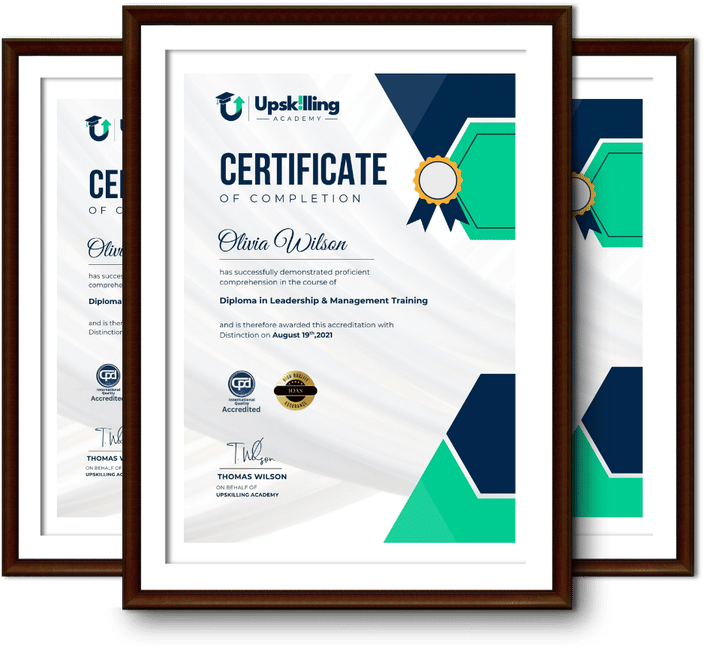
Framed Upskilling Academy certificates of completion

Course Reviews

Christine Ferguson

My experience with you was fantastic and easy to navigate. I'm looking forward to taking the course.
Jesse Harding

Provided highly informative and helpful responses, with quick and efficient replies.

Gary Schwartz

The course selection is broad, engaging, easy to follow, and offers a good challenge.

Bailey Burrows

Excellent course with user-friendly website navigation, making it easy to follow. I'm really enjoying the experience.

Benjamin Moreno

Great course with valuable information. Easy to follow, and I appreciated the flexibility to work at my own pace.

Quality Accreditation

  • incensu Registered Education Supplier
  • Association of Healthcare Trainers member
  • The CPD Group approved provider #790985
  • Disability Confident Committed

FAQ for Level 3 Certificate in Exercise Physiology with Cardivascular and Metabolism

How do I access my course?

Once you complete your purchase, you’ll receive access to your course through your Upskilling Academy account. You can log in and access your learning materials online at any time.

How long do I have access to the course?

Your access period depends on the course and the package you purchase. Please check the course details or your order information for the applicable access period.

Can I study at my own pace?

Yes. Upskilling Academy courses are designed to provide flexible online learning, allowing you to study at a pace that suits your schedule.

Will I receive a certificate?

Certificate availability varies by course. Where a certificate is included, you’ll receive information about the requirements and how to obtain it within the course or upon completion.

Are the courses suitable for beginners?

Many courses are suitable for beginners, while others may assume some previous knowledge. Please review the individual course description for information about the recommended level and prerequisites.