Upskilling Academy
Trusted by 3 million learners 24/7 online training Money back guarantee Fully accredited courses
Level 3 Certificate in DevOps Thumbnail Lifetime Access
Sale

Level 3 Certificate in DevOps

DevOps Overview DevOps is not just a set of tools or techniques, but a transformative culture and philosophy…

Best Seller Limited Time Offer
Last Updated 17 Sep 2026 352 Enrolled English Flexible Schedule

Access to 1500+ Courses with free CPD Certificates for Only £99 Get Now

What you will learn

  • - Gain a strong understanding of DevOps principles and best practices
  • - Learn practical skills to automate software development and deployment
  • - Improve collaboration between development and operations teams
  • - Increase the speed and reliability of software delivery
  • - Enhance your career prospects with in-demand DevOps expertise
  • - Get hands-on experience with popular tools like Docker, Jenkins, and Kubernetes
  • - Develop the ability to identify and resolve bottlenecks in software development processes

Description

DevOps

Overview

DevOps is not just a set of tools or techniques, but a transformative culture and philosophy encompassing the union of software development (Dev) and IT operations (Ops). This course is designed to provide a comprehensive understanding of DevOps, covering its fundamental principles, industry-leading tools, practical workflows, and real-world applications in modern software environments. Whether you are an aspiring system administrator, developer, IT professional, or team leader, this course will equip you with the knowledge and hands-on experience needed to deploy, manage, and automate robust infrastructures with agility and reliability.

Description

The DevOps course expertly bridges the gap between software development and operations, promoting collaboration, efficiency, and continuous improvement throughout the software lifecycle. With technology evolving at a rapid pace, organizations demand professionals who can streamline deployment pipelines, foster cross-functional teamwork, and ensure high-quality product delivery at speed and scale.

Throughout this course, students will explore the foundational principles of DevOps culture such as automation, collaboration, continuous integration (CI), continuous delivery (CD), monitoring, and feedback loops. Participants will develop hands-on proficiency with leading DevOps tools including Git, Jenkins, Docker, Kubernetes, Ansible, Terraform, Prometheus, and more. Through practical exercises and real-world scenarios, you will learn to automate repetitive tasks, build and deploy applications with reliability, manage scalable cloud-native environments, and monitor critical workloads.

Key topics include:

  • DevOps culture, history, and principles
  • Version control using Git and GitHub/GitLab
  • Building and orchestrating CI/CD pipelines with Jenkins and GitHub Actions
  • Containerization fundamentals with Docker
  • Orchestration and deployment with Kubernetes
  • Configuration management with Ansible and Terraform
  • Cloud integration and Infrastructure as Code (IaC)
  • Automated testing and quality assurance
  • System monitoring with Prometheus & Grafana
  • Troubleshooting, security, and best practices

By the end of this course, you will have the expertise to implement DevOps solutions that accelerate software delivery, reduce risk, and promote a strong culture of collaboration and automation.

Career Path

The skills and concepts taught in the DevOps course unlock a wide range of career opportunities in the technology sector. Organizations of all sizes—from agile startups to multinational enterprises—are seeking professionals who can help bridge the gap between development and operations, drive innovation, and manage complex infrastructure. Potential career paths include:

  • DevOps Engineer: Plan, build, and maintain automated pipelines and cloud infrastructure for application deployment and scaling.
  • Site Reliability Engineer (SRE): Ensure system reliability, availability, and high performance through monitoring, automation, and proactive problem solving.
  • Cloud Engineer: Architect, deploy, and manage scalable cloud-based solutions using platforms like AWS, Azure, or Google Cloud Platform (GCP).
  • Release Manager: Oversee software release cycles, coordinate between dev and ops teams, and ensure timely, reliable deployments.
  • Automation Engineer: Create and maintain scripts, tools, and workflows to automate repetitive processes and improve operational efficiency.
  • Infrastructure Engineer: Design and implement robust infrastructure, leveraging Infrastructure as Code and modern tooling.
  • Software Developer: Apply DevOps practices to streamline development workflows, automate testing, and rapidly deliver high-quality code.

The demand for DevOps professionals continues to grow, with industry-leading salaries and significant opportunities for advancement, specialization, and leadership.

Who Is This Course For?

This course is tailored for a diverse audience with a passion for technology and a desire to master modern software delivery concepts. It is particularly suited for:

  • System Administrators: Looking to gain expertise in automation, cloud, and deployment pipelines.
  • Developers: Wanting to take ownership of the deployment lifecycle and learn infrastructure as code and automation.
  • IT Professionals: Seeking to implement, manage, and scale DevOps practices in company environments.
  • QA Testers: Interested in integrating automated testing into CI/CD pipelines.
  • Technical Project Managers: Aiming to deepen their understanding of DevOps workflows and cross-team collaboration.
  • Students and Recent Graduates: Aspiring to pursue careers in DevOps, cloud computing, or IT automation.
  • Anyone curious about DevOps: Motivated self-learners who wish to understand the latest trends in software engineering and operations.

No prior experience with DevOps tools is required, but a foundational awareness of programming, operating systems, and basic IT terminology will help learners get the most from the course.

Requirements

To ensure a productive and successful learning journey, participants should meet the following requirements:

  • Technical Background: A basic understanding of software development or system administration concepts is recommended but not mandatory.
  • Familiarity with Command Line: Some experience working with terminal or command prompt is advantageous.
  • Computer Access: Access to a desktop or laptop computer capable of running virtualization tools (like Docker Desktop or VirtualBox).
  • Operating System: Windows, macOS, or Linux – instructions and labs are provided for all major platforms.
  • Internet Connection: Reliable internet access for downloading tools, connecting to cloud environments, and accessing course materials.
  • Motivation and Curiosity: A willingness to learn, experiment, and engage with new technologies is essential.

The course provides guided hands-on labs, downloadable resources, and step-by-step exercises. All essential software tools are either freely available or offered at no cost.

Embark on your DevOps journey and transform your career with the skills, confidence, and understanding needed to thrive in modern software delivery environments!

Course Curriculum

Course Content

Module 01_ Introducing DevOps

  • Lesson 01_ Introducing DevOps

Module 02_ Designing Your Organisation

Module 03_ Identifying Waste

Module 04_ Measuring Your Organisation

Module 05_ Embracing the New Development Life Cycle

Module 06_ Designing Features from a DevOps Perspective

Module 07_ Implementing Rapid Iteration

Module 08_ Creating Feedback Loops around the Customer

Who should take the course

  • - Software developers wanting to streamline code deployment
  • - IT professionals aiming to improve automation and collaboration
  • - System administrators looking to modernize infrastructure management
  • - QA engineers interested in continuous testing and integration
  • - Project managers seeking to understand DevOps processes
  • - Students and recent graduates pursuing careers in DevOps
  • - Tech enthusiasts eager to learn about cloud and automation tools

Certificate for Success at Every Step

  • No expiry date. You can keep and use the certificate forever.
  • Recognised across various UK industries.
  • Increases your chances of employability.
  • Boosts your professional credibility.
  • Shows you're up to date with industry knowledge.
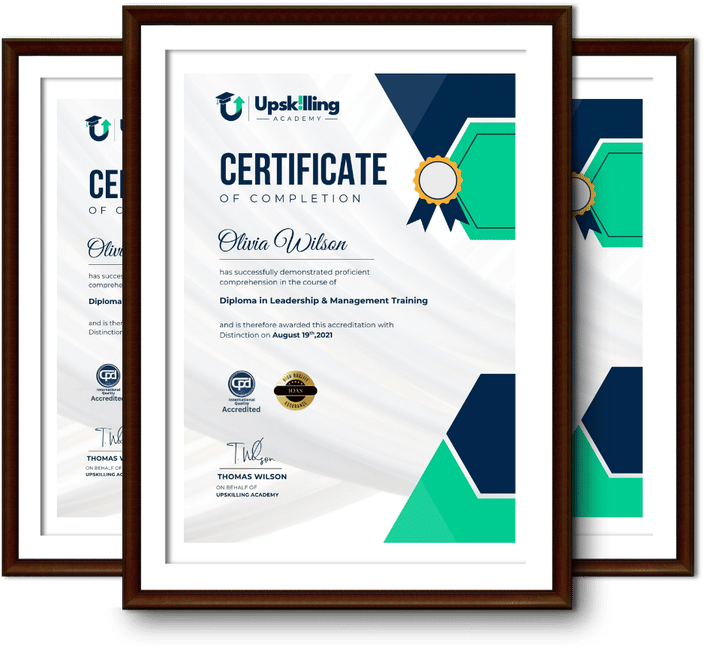
Framed Upskilling Academy certificates of completion

Course Reviews

Christine Ferguson

My experience with you was fantastic and easy to navigate. I'm looking forward to taking the course.

Jesse Harding

Provided highly informative and helpful responses, with quick and efficient replies.

Gary Schwartz

The course selection is broad, engaging, easy to follow, and offers a good challenge.

Bailey Burrows

Excellent course with user-friendly website navigation, making it easy to follow. I'm really enjoying the experience.

Benjamin Moreno

Great course with valuable information. Easy to follow, and I appreciated the flexibility to work at my own pace.

Quality Accreditation

  • incensu Registered Education Supplier
  • Association of Healthcare Trainers member
  • The CPD Group approved provider #790985
  • Disability Confident Committed

FAQ for Level 3 Certificate in DevOps

How do I access my course?

Once you complete your purchase, you’ll receive access to your course through your Upskilling Academy account. You can log in and access your learning materials online at any time.

How long do I have access to the course?

Your access period depends on the course and the package you purchase. Please check the course details or your order information for the applicable access period.

Can I study at my own pace?

Yes. Upskilling Academy courses are designed to provide flexible online learning, allowing you to study at a pace that suits your schedule.

Will I receive a certificate?

Certificate availability varies by course. Where a certificate is included, you’ll receive information about the requirements and how to obtain it within the course or upon completion.

Are the courses suitable for beginners?

Many courses are suitable for beginners, while others may assume some previous knowledge. Please review the individual course description for information about the recommended level and prerequisites.