Upskilling Academy
Trusted by 3 million learners 24/7 online training Money back guarantee Fully accredited courses
Level 3 Certificate in CBT for Eating Disorders Thumbnail Lifetime Access
Sale

Level 3 Certificate in CBT for Eating Disorders

CBT for Eating Disorders Overview The prevalence and complexity of eating disorders, such as anorexia nervosa, bulimia nervosa,…

Best Seller Limited Time Offer
Last Updated 01 Oct 2026 352 Enrolled English Flexible Schedule

Access to 1500+ Courses with free CPD Certificates for Only £99 Get Now

What you will learn

  • - Gain a clear understanding of how thoughts, feelings, and behaviors interact in eating disorders
  • - Learn practical CBT techniques to challenge and change unhelpful eating patterns
  • - Build healthier coping skills to manage triggers, stress, and body image concerns
  • - Improve your relationship with food, your body, and yourself
  • - Develop personalized strategies for relapse prevention and long-term recovery
  • - Increase confidence in managing setbacks and maintaining progress
  • - Access supportive resources to continue growth after the course

Description

CBT for Eating Disorders

Overview

The prevalence and complexity of eating disorders, such as anorexia nervosa, bulimia nervosa, binge eating disorder, and other specified feeding or eating disorders (OSFED), have necessitated highly specialized intervention strategies. One of the most empirically supported and widely adopted treatment approaches is Cognitive Behavioral Therapy (CBT). This comprehensive course, “CBT for Eating Disorders,” is designed to equip mental health professionals, students, and anyone interested in understanding or providing support for individuals struggling with eating disorders, with an in-depth, evidence-based foundation in Cognitive Behavioral Therapy techniques as they uniquely apply to disordered eating.

Throughout this course, learners will delve into the theoretical underpinnings of CBT, gain a thorough understanding of the specific protocols, interventions, and skills required to help individuals with eating disorders, and learn to adapt and apply CBT principles flexibly across different contexts and populations. Our hands-on approach incorporates case studies, role-playing exercises, practical worksheets, and real-life scenarios, allowing participants not only to understand the what and why of CBT for eating disorders but also to develop the practical prowess and confidence to make a tangible difference in clinical or support settings.

Description

Eating disorders represent a significant clinical challenge, affecting millions of individuals worldwide and posing complex psychological, physiological, and social hurdles. Traditional therapeutic approaches can sometimes be ineffective or poorly tailored to the unique needs of those with eating disorders, resulting in frustration for both clients and practitioners. Cognitive Behavioral Therapy (CBT) has emerged as the gold standard for the treatment of eating disorders, offering structured, goal-oriented, and evidence-based interventions that target dysfunctional cognitions and behaviors at the root of disordered eating.

This course begins by establishing foundational knowledge around the etiology, diagnostic criteria, and impacts of various eating disorders. Students will explore why and how CBT works, its evolution as a treatment modality, and its specific adaptation for eating disorders. We’ll examine the multi-faceted cognitive and behavioral maintaining factors—perfectionism, body image disturbance, emotional regulation difficulties, and dietary restraint—and the ways in which CBT articulates and addresses these challenges.

The curriculum is divided into thematic modules covering:

  • Assessment and Case Formulation: Recognizing signs and symptoms, developing collaborative case formulations, and establishing therapeutic goals.
  • Psychoeducation and Engagement: Presenting clients with information about eating disorders in a sensitive and empowering manner, enhancing motivation and readiness for change.
  • CBT Techniques Specific to Eating Disorders: Self-monitoring, cognitive restructuring, exposure and response prevention, and behavioral experiments tailored to food, weight, and body image issues.
  • Managing Comorbidities and Relapse Prevention: Integrating strategies to treat co-occurring conditions (e.g., anxiety, depression) and supporting long-term maintenance of gains.
  • Cultural and Developmental Considerations: Modifying interventions for adolescents, men, and culturally diverse populations.

Participants will actively engage with evidence-based worksheets, video demonstrations, guided role-plays, and reflective exercises. The course is grounded in the latest research and follows international clinical guidelines, yet maintains a practical focus—preparing learners to apply what they learn within real-world therapeutic or support frameworks.

Career Path

CBT for Eating Disorders is a highly valued skill set within a wide spectrum of mental health and healthcare careers. Whether you are an aspiring psychologist, counselor, psychotherapist, social worker, or medical professional, mastery of these techniques will enhance your professional profile and expand your capacity to provide top-tier care to individuals in need.

Graduates and professionals who complete this course may pursue or advance in the following roles:

  • Licensed Therapist/Counselor: Work in private practice, community mental health centers, hospitals, or specialized eating disorder clinics using CBT protocols.
  • Clinical Psychologist: Conduct research, provide assessment, and deliver CBT as part of multi-disciplinary treatment teams.
  • School Counselor or School Psychologist: Support students at risk for or dealing with disordered eating, deliver psychoeducation and early interventions.
  • Registered Dietitian or Nutritionist (with mental health training): Aid client recovery as part of integrative treatment teams.
  • Healthcare Professional (e.g., Nurses, General Practitioners): Gain foundational CBT skills to better support, refer, and collaborate in treatment of patients with eating disorders.
  • Academic/Researcher: Conduct studies on CBT efficacy or adaptations for special populations.
  • Peer Support Worker or Advocate: Use CBT-informed principles to offer empathetic, structured support/advice in non-clinical settings or peer-led organizations.

This skillset is in high demand in outpatient, inpatient, school-based, telehealth, and community settings, with global recognition of CBT as an essential mode of treatment for eating disorders.

Who Is This Course For?

  • Mental health professionals — psychologists, counselors, psychotherapists, social workers seeking advanced or specialized skills in eating disorders treatment.
  • Graduate students enrolled in clinical psychology, counseling, social work, or related programs who wish to complement their coursework with practical, evidence-based therapeutic skills.
  • Medical professionals (general practitioners, pediatricians, nurses, dietitians) who encounter patients with eating disorders and want to understand or integrate CBT principles in their practice.
  • School counselors, educators, coaches, and student support staff who wish to learn how to support students showing signs of disordered eating.
  • Peer support workers, advocates, or carers who work in the eating disorder recovery community.
  • Individuals in recovery or with lived experience who wish to gain insight into the therapeutic process and self-management strategies (note: participation in therapeutic or learning settings should be adjunctive to professional medical and psychological support).

Requirements

  • Background in psychology, counseling, psychotherapy, or a related mental health field is strongly recommended but not strictly required.
  • Graduate students must be enrolled in or have completed relevant introductory coursework in abnormal psychology or clinical interventions.
  • Medical professionals and allied health practitioners should possess foundational understanding of the physical and psychological components of eating disorders.
  • Eagerness to learn and willingness to engage in case studies, practical exercises, and self-reflection.
  • Access to internet-enabled device to participate in online modules and discussions; all other learning materials will be provided.
  • This course is not a replacement for professional clinical training but complements ongoing academic, practitioner, or support work.
  • For those in recovery, current or recent severe illness may make the course content triggering; we recommend discussing participation with a treatment provider beforehand.

Upon successful completion, learners will have a robust toolkit of CBT strategies, an enhanced understanding of eating disorders, and actionable skills that improve both individual practice and client outcomes.

Course Curriculum

Course Content

Module 1_ Introduction to Eating Disorders

  • Lesson 1_ Introduction to Eating Disorders

Module 2_ Fundamentals of Cognitive Behavioural Therapy (CBT)

Module 3_ Assessment and Formulation

Module 4_ Psychoeducation for Clients and Families

Module 5_ Cognitive Strategies

Module 6_ Behavioural Interventions

Module 7_ Emotional Regulation and Coping Skills

Module 8_ Addressing Body Image and Self-Esteem

Module 9_ Relapse Prevention and Maintenance

Module 10_ Practical Application and Case Studies

Who should take the course

  • - Mental health professionals seeking to specialize in eating disorder treatment
  • - Therapists and counselors wanting to expand their CBT skills
  • - Clinical psychologists working with clients who have disordered eating
  • - Social workers supporting individuals with body image or eating issues
  • - Graduate students in psychology or counseling programs
  • - Dietitians and nutritionists interested in psychological approaches
  • - Healthcare providers looking to understand CBT techniques for eating disorders

Certificate for Success at Every Step

  • No expiry date. You can keep and use the certificate forever.
  • Recognised across various UK industries.
  • Increases your chances of employability.
  • Boosts your professional credibility.
  • Shows you're up to date with industry knowledge.
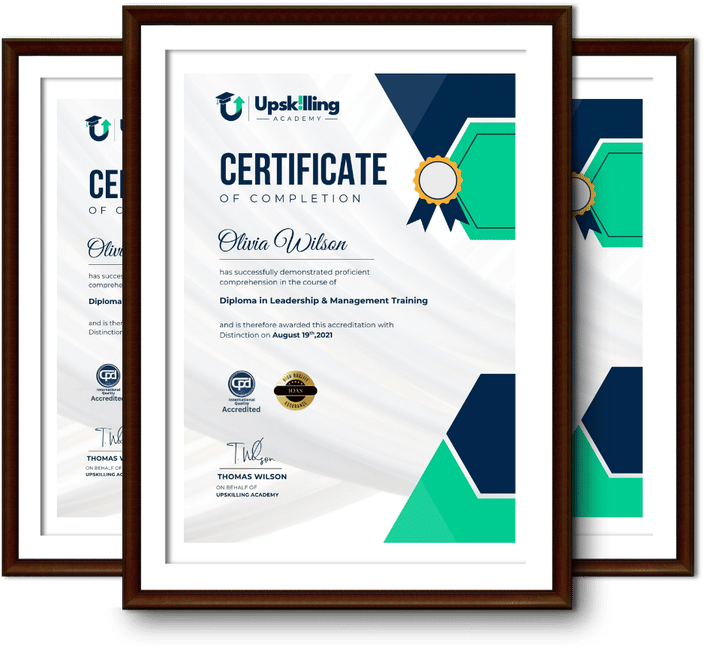
Framed Upskilling Academy certificates of completion

Course Reviews

Christine Ferguson

My experience with you was fantastic and easy to navigate. I'm looking forward to taking the course.

Jesse Harding

Provided highly informative and helpful responses, with quick and efficient replies.

Gary Schwartz

The course selection is broad, engaging, easy to follow, and offers a good challenge.

Bailey Burrows

Excellent course with user-friendly website navigation, making it easy to follow. I'm really enjoying the experience.

Benjamin Moreno

Great course with valuable information. Easy to follow, and I appreciated the flexibility to work at my own pace.

Quality Accreditation

  • incensu Registered Education Supplier
  • Association of Healthcare Trainers member
  • The CPD Group approved provider #790985
  • Disability Confident Committed

FAQ for Level 3 Certificate in CBT for Eating Disorders

How do I access my course?

Once you complete your purchase, you’ll receive access to your course through your Upskilling Academy account. You can log in and access your learning materials online at any time.

How long do I have access to the course?

Your access period depends on the course and the package you purchase. Please check the course details or your order information for the applicable access period.

Can I study at my own pace?

Yes. Upskilling Academy courses are designed to provide flexible online learning, allowing you to study at a pace that suits your schedule.

Will I receive a certificate?

Certificate availability varies by course. Where a certificate is included, you’ll receive information about the requirements and how to obtain it within the course or upon completion.

Are the courses suitable for beginners?

Many courses are suitable for beginners, while others may assume some previous knowledge. Please review the individual course description for information about the recommended level and prerequisites.