
Christine Ferguson
My experience with you was fantastic and easy to navigate. I'm looking forward to taking the course.
 Lifetime Access
Avoiding Rear-End Collisions – Large Vehicles (US) Overview Rear-end collisions remain among the most common and costly types…
Access to 1500+ Courses with free CPD Certificates for Only £99 Get Now
Rear-end collisions remain among the most common and costly types of roadway accidents, particularly for operators of large vehicles such as trucks, buses, and other commercial transports. Their substantial mass, longer stopping distances, and visibility challenges make rear-end collisions not only more probable but also far more dangerous when they do occur. The “Avoiding Rear-End Collisions – Large Vehicles (US)” course is a comprehensive, interactive program designed specifically to equip drivers, safety managers, and fleet operators with the critical knowledge and skills necessary to recognize, prevent, and mitigate rear-end incidents on American roads.
This course leverages the latest data, federal regulations, and best practices from the fields of transportation safety and driver training. Through a blend of multimedia presentations, real-world scenarios, and assessment tools, participants will learn how to maintain heightened situational awareness, adjust following distances, and employ proactive behavioral strategies tailored for large vehicle operation in a variety of environments.
In this robust learning experience, students engage with focused modules that unpack every aspect of rear-end collisions relevant to large vehicles. From understanding the physics behind vehicle dynamics and braking performance to mastering advanced observation techniques, this course leaves no stone unturned in preparing professionals to safely navigate the challenges of America’s highways, urban streets, and industrial settings.
The course is further supported by case studies, interactive quizzes, and practical exercises that reinforce each learning point, ensuring participants are not only well-informed but also capable of applying these lessons in real-world situations.
The successful completion of this course opens up significant advantages and opportunities for a variety of professionals within the commercial driving and transport safety industries:
Completion of this course may also lead to continuing education credits or support career advancement through recognition of higher safety training standards.
“Avoiding Rear-End Collisions – Large Vehicles (US)” is designed for a broad audience involved with the operation or oversight of large vehicles in the United States. Specifically, this course is ideal for:
To derive the maximum benefit from this course, students should meet the following prerequisites:
No advanced technical background is required. All specialized concepts will be introduced and explained with clarity, making the course accessible to those at various stages in their transportation careers.
My experience with you was fantastic and easy to navigate. I'm looking forward to taking the course.
Provided highly informative and helpful responses, with quick and efficient replies.
The course selection is broad, engaging, easy to follow, and offers a good challenge.
Excellent course with user-friendly website navigation, making it easy to follow. I'm really enjoying the experience.
Great course with valuable information. Easy to follow, and I appreciated the flexibility to work at my own pace.



Once you complete your purchase, you’ll receive access to your course through your Upskilling Academy account. You can log in and access your learning materials online at any time.
Your access period depends on the course and the package you purchase. Please check the course details or your order information for the applicable access period.
Yes. Upskilling Academy courses are designed to provide flexible online learning, allowing you to study at a pace that suits your schedule.
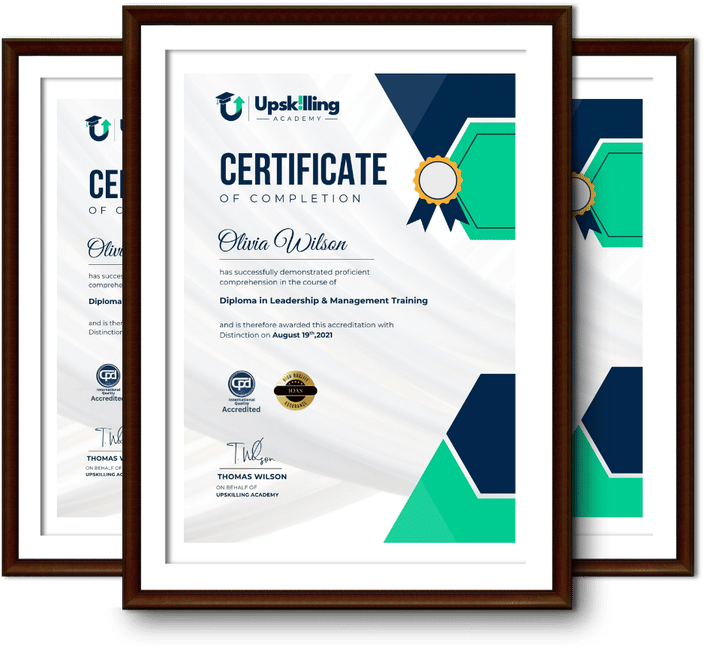
Certificate availability varies by course. Where a certificate is included, you’ll receive information about the requirements and how to obtain it within the course or upon completion.
Many courses are suitable for beginners, while others may assume some previous knowledge. Please review the individual course description for information about the recommended level and prerequisites.