Upskilling Academy
Trusted by 3 million learners 24/7 online training Money back guarantee Fully accredited courses
Level 3 Certificate in Asset Management Thumbnail Lifetime Access
Sale

Level 3 Certificate in Asset Management

Asset Management Overview Asset Management is a dynamic discipline at the intersection of finance, economics, risk management, and…

Best Seller Limited Time Offer
Last Updated 17 Sep 2026 352 Enrolled English Flexible Schedule

Access to 1500+ Courses with free CPD Certificates for Only £99 Get Now

What you will learn

  • - Gain a solid understanding of core asset management principles and best practices
  • - Learn how to maximize the value and performance of assets throughout their lifecycle
  • - Develop skills to assess risks and make data-driven investment decisions
  • - Enhance your ability to create effective asset management strategies for organizations
  • - Improve career prospects in finance, real estate, and related industries
  • - Build confidence in using tools and techniques for tracking and evaluating assets
  • - Network with peers and industry professionals for ongoing learning and growth

Description

Asset Management

Overview

Asset Management is a dynamic discipline at the intersection of finance, economics, risk management, and analytics. It is the process of developing, operating, maintaining, and selling assets in a cost-effective manner. This course provides a comprehensive exploration of strategies and tools used to maximize the value of assets, ranging from financial instruments like stocks and bonds to physical assets such as buildings and equipment. Through this course, students will develop a strong foundation in both theoretical concepts and practical skills essential to succeed in the rapidly-evolving asset management industry.

Description

The Asset Management course is designed to immerse students in the core principles and practices that drive the efficient management of individual and institutional assets. The curriculum blends rigorous academic theory with hands-on, real-world applications. Students will gain insights into the various types of assets, including financial, tangible, and intangible, and will learn to formulate strategies for managing portfolios consistent with investment objectives and risk tolerances.

The course content spans topics such as asset allocation, investment analysis, portfolio optimization, risk management, performance measurement, and regulatory compliance. Emphasis is placed on modern portfolio theory, behavioral finance, alternative investments, and the influence of global economic trends on asset values. Students will engage in case studies, group projects, simulations, and exercises designed to simulate industry scenarios.

By the end of the course, students will be proficient in using industry-standard tools and software for asset management, interpreting financial reports and market data, and applying ethical considerations in investment decision-making. The program also covers recent technological advancements, such as the integration of big data and artificial intelligence into asset management processes, preparing students for the future of finance.

Career Path

The Asset Management field offers a broad spectrum of career opportunities for individuals with diverse skills and interests. Course graduates are equipped to pursue rewarding careers in roles such as:

  • Portfolio Manager: Responsible for creating and overseeing investment portfolios to meet specific financial goals for clients or institutions.
  • Financial Analyst: Performs quantitative and qualitative analyses of financial data to inform investment decisions and strategy.
  • Asset Manager: Manages client assets, focusing on maximizing returns and mitigating risk while ensuring regulatory compliance.
  • Risk Manager: Specializes in identifying, analyzing, and managing risks related to asset portfolios and financial instruments.
  • Private Wealth Advisor: Works closely with high-net-worth individuals to tailor asset management strategies to their unique objectives.
  • Investment Consultant: Provides guidance to corporate clients, endowments, or pension funds regarding effective asset allocation and portfolio management.
  • Operations Analyst: Supports back-office functions, ensuring accurate reporting, compliance, and optimal operational workflows.
  • Real Estate Asset Manager: Focuses on the acquisition, disposition, and maintenance of real estate assets for maximum value creation.

Furthermore, the course is an excellent starting point for those interested in pursuing advanced credentials, including Chartered Financial Analyst (CFA), Certified Financial Planner (CFP), or master’s degree programs in finance, economics, or asset management.

Who Is This Course For?

This Asset Management course is ideal for a wide audience, including but not limited to:

  • Undergraduate and graduate students seeking to develop expertise in asset management or related fields like finance, economics, or business administration.
  • Early- and mid-career professionals aiming to shift into asset management or enhance their skills in financial analysis, investment, or portfolio management.
  • Entrepreneurs and business owners interested in managing their company assets efficiently and making informed investment decisions.
  • Individuals preparing for professional certification exams (e.g., CFA, CFP) who require a robust foundation in asset management concepts, techniques, and ethics.
  • Anyone with a keen interest in financial markets, investing, and wealth management who is eager to understand how to optimize asset value and performance.

No prior asset management experience is required, although the course is structured to accommodate students with different levels of familiarity with core finance and investment concepts.

Requirements

To ensure successful participation and achievement in the Asset Management course, students should meet the following requirements:

  • Academic Background: A high school diploma or equivalent is required. Some foundational knowledge in mathematics, economics, or business is beneficial but not mandatory.
  • Technical Skills: Basic computer literacy, proficiency with spreadsheets (such as Microsoft Excel or Google Sheets), and comfort with using online learning platforms and financial analysis tools.
  • Language Skills: As the course is delivered in English, students should have a functional command of written and spoken English to follow lectures, readings, and participate in discussions.
  • Technology Requirements: Access to a computer or laptop with a reliable internet connection, and the ability to install and use required software (some modules may require financial modeling or simulation tools).
  • Motivation and Willingness to Learn: Asset Management is a challenging subject that rewards curiosity, diligence, and engagement. Students should be prepared to commit time to case studies, group work, and independent research.

No prior professional experience in asset management is necessary. The course provides all the foundational knowledge, progressing to advanced applications to ensure all students can succeed and get the most out of their learning journey.

Course Curriculum

Course Content

Module 1_ Introduction to Asset Management

  • Lesson 1_ Introduction to Asset Management

Module 2_ Asset Identification and Classification

Module 3_ Asset Valuation and Performance Assessment

Module 4_ Maintenance Strategies in Asset Management

Module 5_ Risk Management in Asset Management

Module 6_ Digital Transformation in Asset Management

Who should take the course

  • - Professionals looking to advance in asset management careers
  • - New graduates interested in finance or investment roles
  • - Business owners wanting to manage company assets effectively
  • - Individuals preparing for asset management certifications
  • - Finance team members seeking practical asset management skills
  • - Real estate or property managers exploring asset optimization
  • - Investors eager to understand asset management principles

Certificate for Success at Every Step

  • No expiry date. You can keep and use the certificate forever.
  • Recognised across various UK industries.
  • Increases your chances of employability.
  • Boosts your professional credibility.
  • Shows you're up to date with industry knowledge.
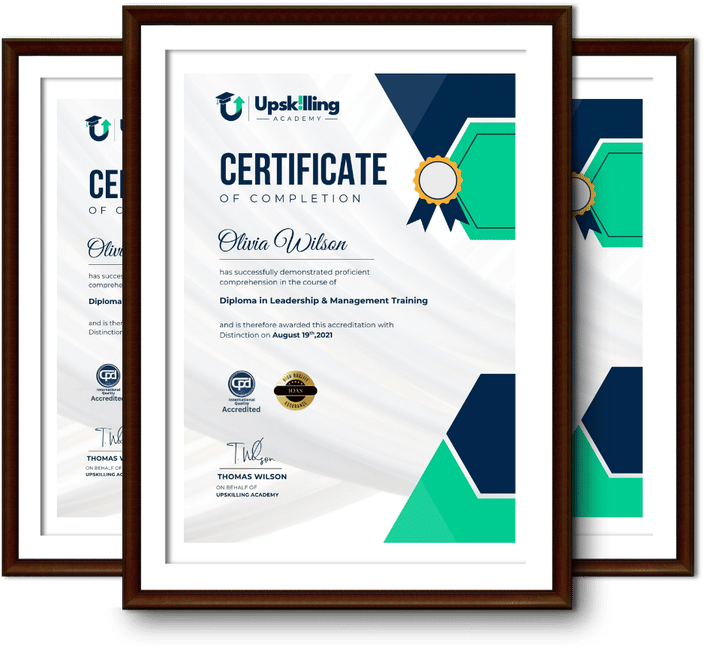
Framed Upskilling Academy certificates of completion

Course Reviews

Christine Ferguson

My experience with you was fantastic and easy to navigate. I'm looking forward to taking the course.

Jesse Harding

Provided highly informative and helpful responses, with quick and efficient replies.

Gary Schwartz

The course selection is broad, engaging, easy to follow, and offers a good challenge.

Bailey Burrows

Excellent course with user-friendly website navigation, making it easy to follow. I'm really enjoying the experience.

Benjamin Moreno

Great course with valuable information. Easy to follow, and I appreciated the flexibility to work at my own pace.

Quality Accreditation

  • incensu Registered Education Supplier
  • Association of Healthcare Trainers member
  • The CPD Group approved provider #790985
  • Disability Confident Committed

FAQ for Level 3 Certificate in Asset Management

How do I access my course?

Once you complete your purchase, you’ll receive access to your course through your Upskilling Academy account. You can log in and access your learning materials online at any time.

How long do I have access to the course?

Your access period depends on the course and the package you purchase. Please check the course details or your order information for the applicable access period.

Can I study at my own pace?

Yes. Upskilling Academy courses are designed to provide flexible online learning, allowing you to study at a pace that suits your schedule.

Will I receive a certificate?

Certificate availability varies by course. Where a certificate is included, you’ll receive information about the requirements and how to obtain it within the course or upon completion.

Are the courses suitable for beginners?

Many courses are suitable for beginners, while others may assume some previous knowledge. Please review the individual course description for information about the recommended level and prerequisites.