
Upskilling Academy
Trusted by 3 million learners 24/7 online training Money back guarantee Fully accredited courses
Level 3 Certificate in Basic Electronics Repair Thumbnail Lifetime Access
Sale

Level 3 Certificate in Basic Electronics Repair

Basic Electronics Repair Overview The Basic Electronics Repair course is designed to introduce students to the foundational knowledge…

Best Seller Limited Time Offer
Last Updated 13 Oct 2026 352 Enrolled English Flexible Schedule

Access to 1500+ Courses with free CPD Certificates for Only £59 Get Now

What you will learn

  • - Gain practical skills to diagnose and fix common electronic device issues
  • - Save money by repairing gadgets and appliances instead of replacing them
  • - Boost your understanding of fundamental electronic components and circuits
  • - Increase your employability in technical and maintenance roles
  • - Develop confidence to safely handle and troubleshoot electronic devices
  • - Open up opportunities for side income or a new career path in electronics repair
  • - Reduce electronic waste and contribute to environmental sustainability

Description

Basic Electronics Repair

Overview

The Basic Electronics Repair course is designed to introduce students to the foundational knowledge and hands-on skills necessary to diagnose, troubleshoot, and repair a wide variety of electronic devices. From household appliances and consumer gadgets to more specialized equipment, this course aims to demystify the fascinating world of electronics by taking a practical, problem-solving approach to real-life repairs. Students will explore the essential principles of electronics, learn how to use repair tools with confidence, and practice safe and efficient repair techniques. Whether you have a personal interest in electronics or are considering a professional path in this field, this course provides a comprehensive starting point.

Description

This course provides a thorough grounding in the basics of electronics repair, blending theory with ample hands-on experience. The curriculum is thoughtfully structured to start from the very basics, assuming no prior knowledge of electronics. Students are introduced to core topics, including:

  • Understanding electronics components: Learn about resistors, capacitors, transistors, diodes, integrated circuits, switches, connectors, and more. Discover how these components are used in different devices and the roles they play in circuits.
  • Circuit analysis: Develop the ability to read and interpret circuit diagrams, trace signal flows, and understand how circuits function as a whole.
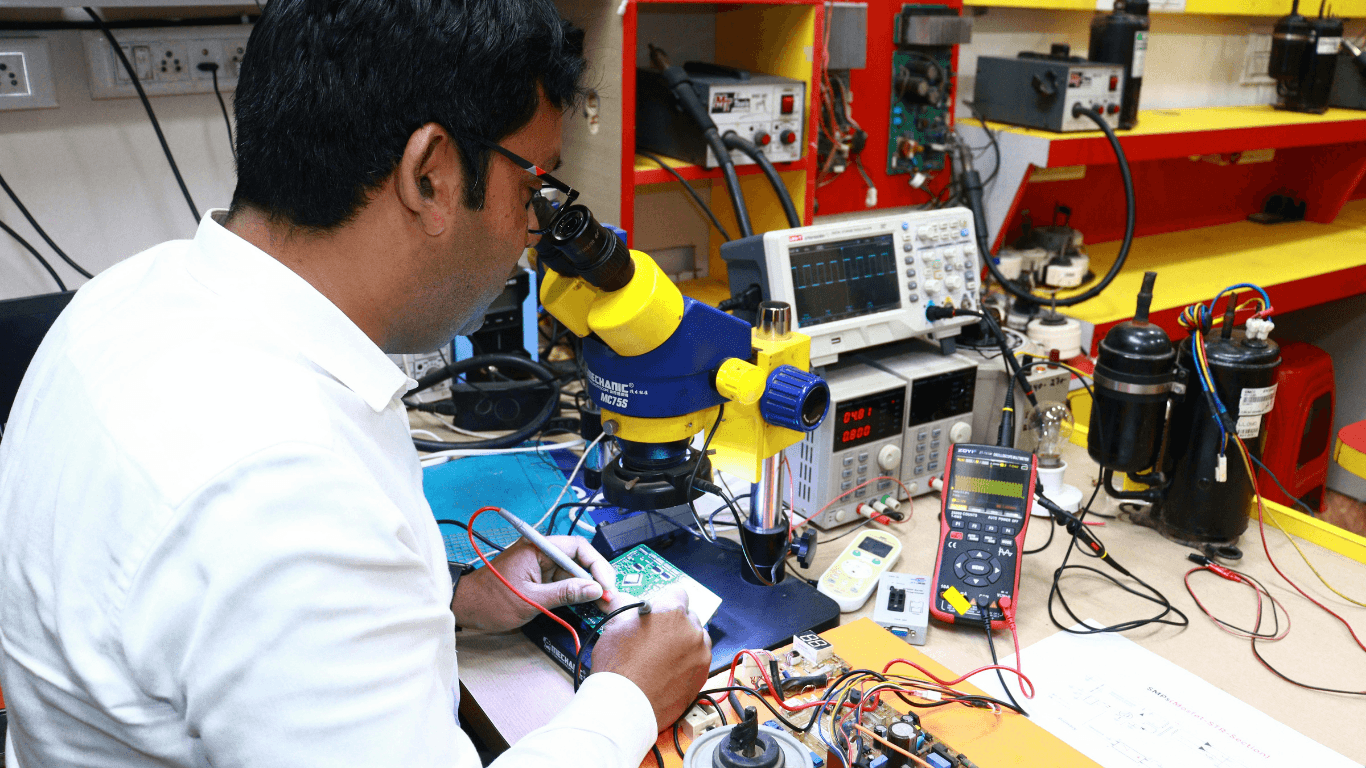
  • Tools of the trade: Receive training on the proper use of multimeters, soldering irons, power supplies, desoldering tools, oscilloscopes, and other repair equipment. Learn best practices to care for and maintain your tools.
  • Troubleshooting techniques: Acquire systematic approaches for identifying, isolating, and addressing faults in electronic devices. Discover common issues such as broken traces, faulty components, poor connections, and short circuits.
  • Repair and replacement: Practice desoldering and soldering components, replacing broken parts, reinforcing weak spots in circuits, and testing repairs. Projects and lab sessions provide opportunities to work on real circuit boards and devices.
  • Safety protocols: Safety is paramount. Learn how to protect yourself from electrical hazards, safely handle components, properly discharge capacitors, and prevent damage to static-sensitive devices.

Throughout the course, students will benefit from a series of supervised lab exercises and repair projects that build competence and confidence. By the end of the course, participants will have completed several successful repairs on actual non-functioning devices, with skills that are readily transferable to other electronics projects.

Career Path

Completion of the Basic Electronics Repair course opens the door to a range of opportunities, both for personal enrichment and professional growth. Graduates of this course may pursue or enhance roles such as:

  • Entry-level electronics repair technician
  • Appliance or consumer electronics service specialist
  • Technical support staff for electronics companies
  • Field service engineer (with further training)
  • Self-employed repair professional or small business owner
  • Electronics hobbyist or maker
  • Assistant in electronics assembly or manufacturing
  • Pathway toward advanced electronics study or certification

Many industries seek individuals with basic electronics troubleshooting and repair skills, including IT, manufacturing, telecommunications, retail, automotive, and home automation. Whether you are seeking to launch a career, supplement your existing technical expertise, or repair devices for personal satisfaction, this course lays the essential groundwork.

Who Is This Course For?

This course is designed with accessibility and inclusivity in mind, making it suitable for a broad spectrum of learners. The Basic Electronics Repair course is ideal for:

  • Complete beginners who have no prior experience with electronics
  • Hobbyists and tinkerers who wish to expand their capabilities and understanding
  • Students considering a technical or engineering pathway
  • Adults seeking a new practical skill or potential career change
  • Entrepreneurs interested in starting a repair business
  • DIYers looking to save money by repairing their own household devices
  • Individuals in related fields such as IT, AV, or facilities maintenance needing foundational electronics repair skills

If you are curious about how electronic devices work and want the satisfaction of fixing things yourself, this course is for you. No specialized background is required – just a willingness to learn and a basic aptitude for working with your hands.

Requirements

This course sets out to be as accessible as possible, minimizing prerequisites while emphasizing the need for responsible and safe learning. To enroll and fully benefit from the Basic Electronics Repair course, students will need:

  • No prior electronics knowledge required: The course starts from the ground up, making it suitable for complete beginners.
  • Basic proficiency in using hand tools: While not mandatory, some familiarity with using simple tools (like screwdrivers and pliers) is helpful.
  • Comfort with basic math and reading: The course involves reading circuit diagrams and performing simple calculations (Ohm’s Law, basic arithmetic).
  • Approval for minors (if applicable): Participants under 18 may need parental or guardian permission to enroll, particularly for in-person lab work.
  • Access to safety gear: Students should have or be prepared to acquire basic safety equipment, such as safety glasses, anti-static wrist straps, and appropriate clothing for lab work.
  • Tool kit (provided or list supplied): A recommended list of affordable tools and equipment will be provided in advance, with guidance on purchasing or borrowing what is needed for home practice.

All instructional materials, project kits, and a full safety briefing will be provided at the start of the course. Support is available throughout, ensuring all students can progress at their own pace and receive help as needed.

Course Curriculum

Course Content

Module 1_ Introduction to Electronics Repair

  • Lesson 1_ Introduction to Electronics Repair

Module 2_ Understanding Electronic Components

Module 3_ Circuit Analysis Techniques

Module 4_ Soldering and Desoldering Techniques

Module 5_ Basic Power Supply Repair

Module 6_ Digital Electronics Fundamentals

Module 7_ Analog Electronics Fundamentals

Who should take the course

  • - Beginners interested in learning electronics repair
  • - Hobbyists wanting to fix household electronic items
  • - Students studying basic electronics concepts
  • - Small business owners maintaining electronic equipment
  • - Technicians seeking to refresh their repair skills
  • - DIY enthusiasts looking to save money on repairs
  • - Anyone curious about how electronic devices work

Certificate for Success at Every Step

  • No expiry date. You can keep and use the certificate forever.
  • Recognised across various UK industries.
  • Increases your chances of employability.
  • Boosts your professional credibility.
  • Shows you're up to date with industry knowledge.
Framed Upskilling Academy certificates of completion

Course Reviews

Christine Ferguson

My experience with you was fantastic and easy to navigate. I'm looking forward to taking the course.
Jesse Harding

Provided highly informative and helpful responses, with quick and efficient replies.

Gary Schwartz

The course selection is broad, engaging, easy to follow, and offers a good challenge.

Bailey Burrows

Excellent course with user-friendly website navigation, making it easy to follow. I'm really enjoying the experience.

Benjamin Moreno

Great course with valuable information. Easy to follow, and I appreciated the flexibility to work at my own pace.

Quality Accreditation

  • incensu Registered Education Supplier
  • Association of Healthcare Trainers member
  • The CPD Group approved provider #790985
  • Disability Confident Committed

FAQ for Level 3 Certificate in Basic Electronics Repair

How do I access my course?

Once you complete your purchase, you’ll receive access to your course through your Upskilling Academy account. You can log in and access your learning materials online at any time.

How long do I have access to the course?

Your access period depends on the course and the package you purchase. Please check the course details or your order information for the applicable access period.

Can I study at my own pace?

Yes. Upskilling Academy courses are designed to provide flexible online learning, allowing you to study at a pace that suits your schedule.

Will I receive a certificate?

Certificate availability varies by course. Where a certificate is included, you’ll receive information about the requirements and how to obtain it within the course or upon completion.

Are the courses suitable for beginners?

Many courses are suitable for beginners, while others may assume some previous knowledge. Please review the individual course description for information about the recommended level and prerequisites.

